Carol Yotsudaʻs lively re-cap of the past weekʻs E Kanikapila Kākou concert
E Kanikapila Kākou Week #8 Wrap
featuring
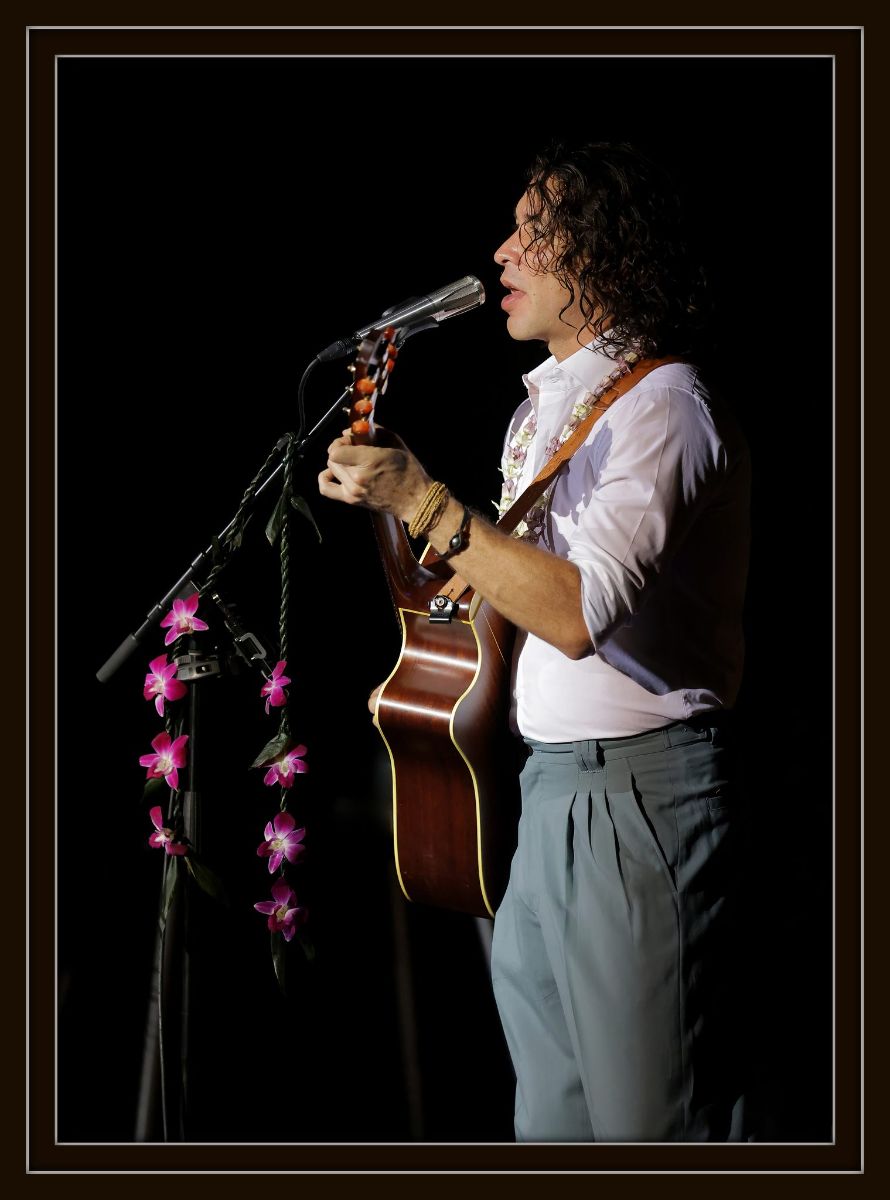
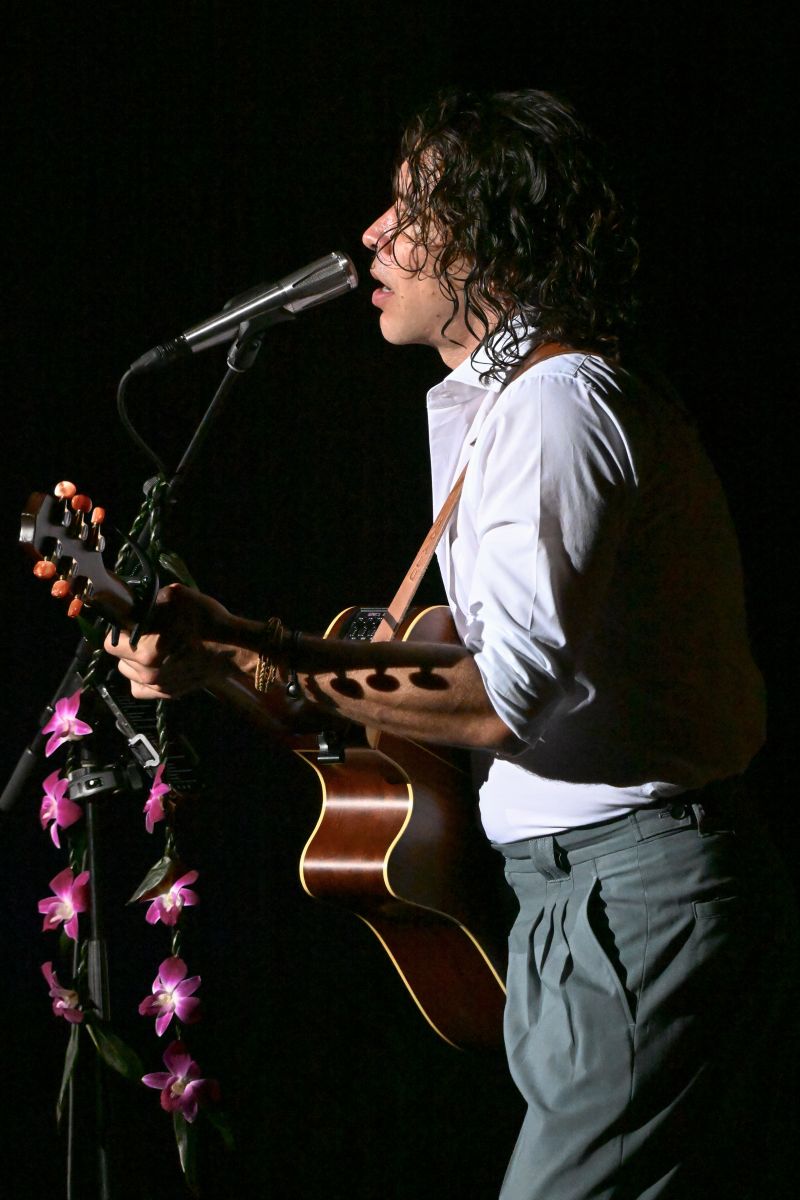
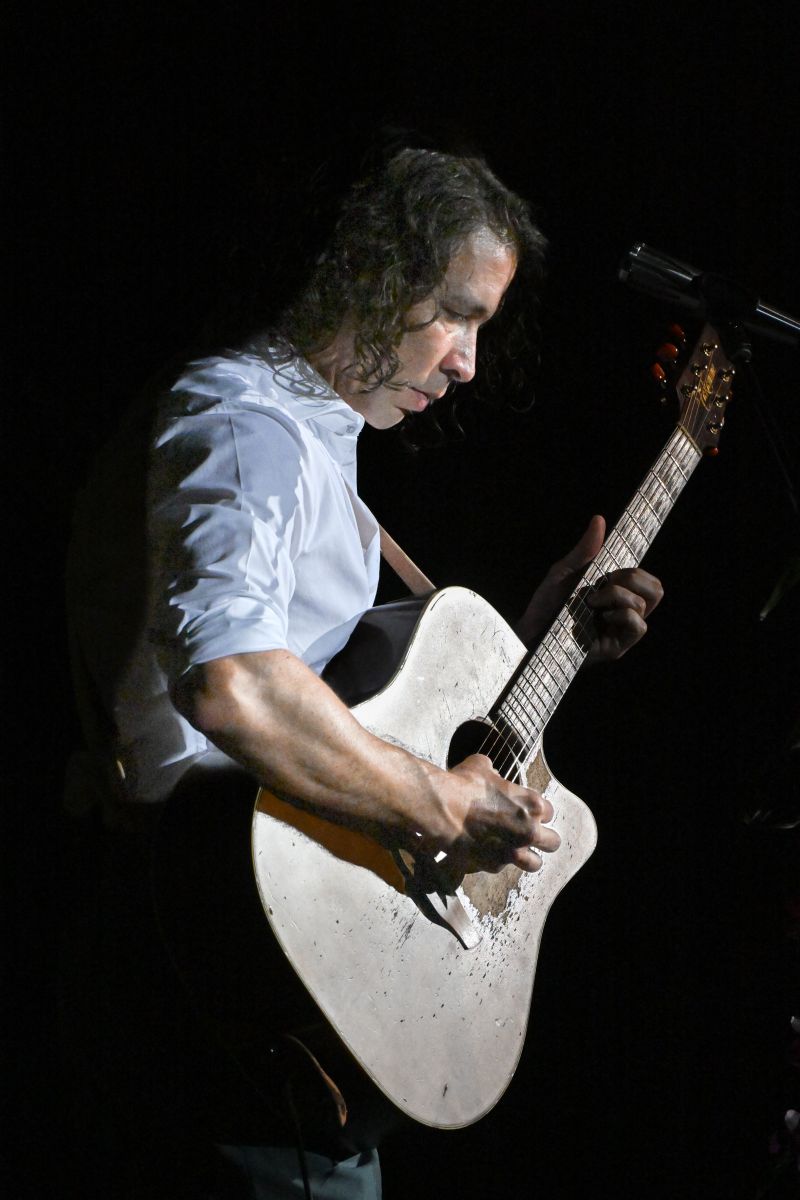
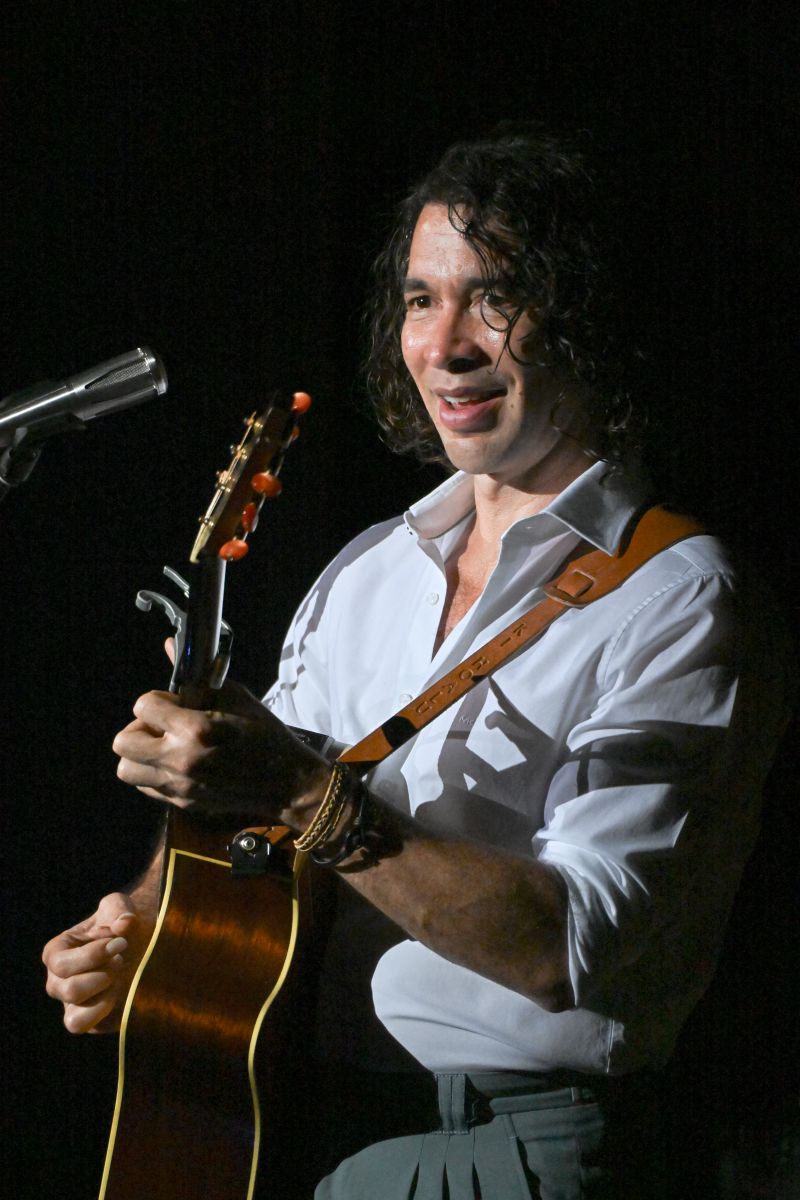
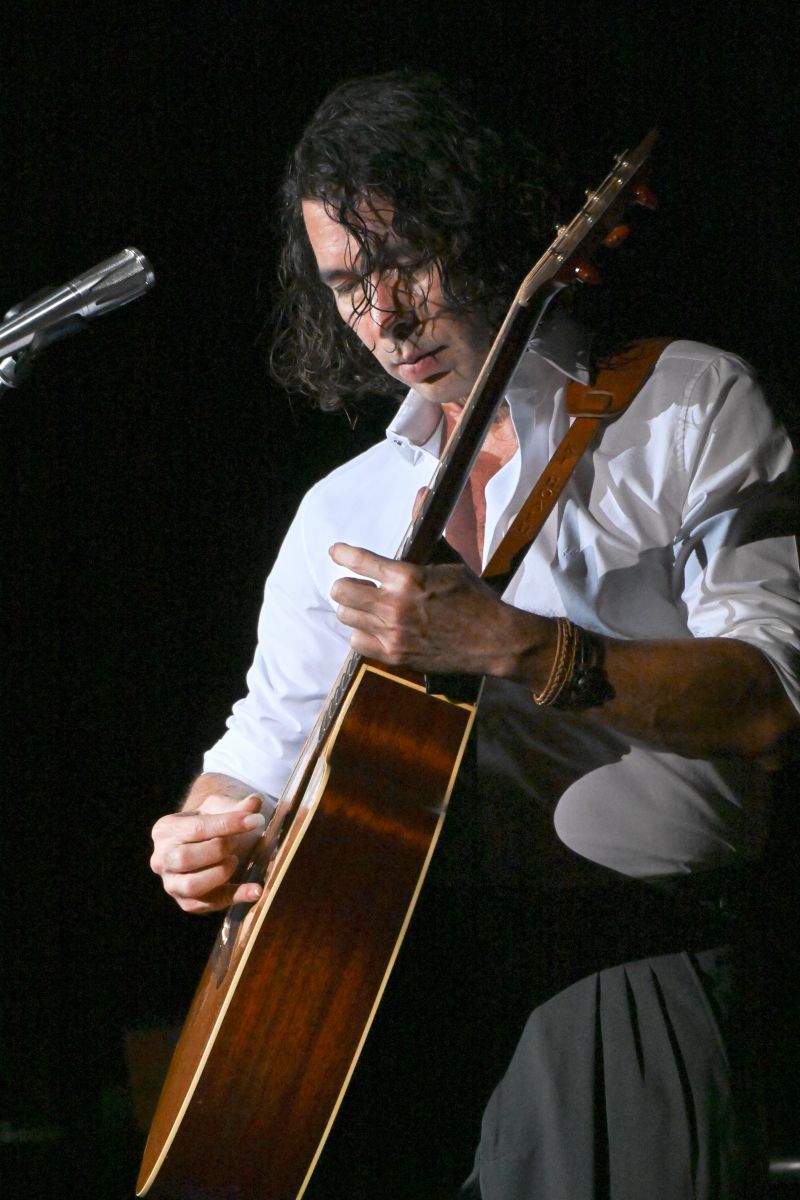
Makana
"Lei Kukui"
Makana comes to Kauaʻi as part of his statewide tour titled Lei Kukui.
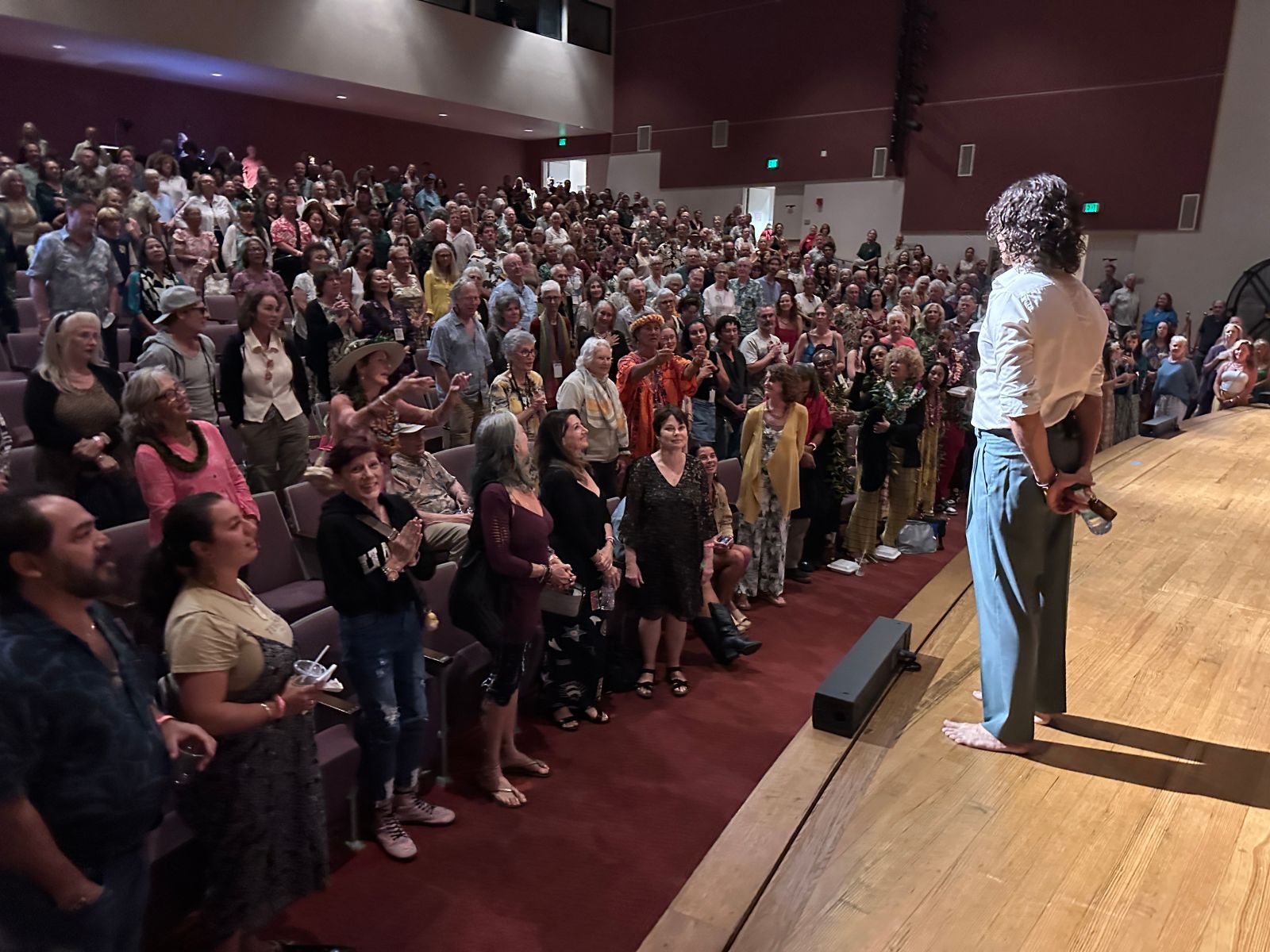
It was a SOLD OUT packed house of fans who came to celebrate music with Makana.
Makana opens with a solo introduction entitled Blue Skies . . . such an appropriate song for tonight after the entire state has gone through a week of gray skies due to the devastating Kona Low. Happily today we are blessed with blue skies and no rain to a sold-out crowd for our final night of EKK in its 43rd season.
Deep in an Ancient Hawaiian Forest
with its ethereal instrumentation makes you feel like you are in a deep dark cave dripping with ferns; it was just the perfect sound to help you settle in for an evening of Makanaʻs music . . . songs that pull at your heartstrings, tickles your funny bone, move you to act and much more.
Makana is always digging into the history behind songs and shares some historical background about the song ʻAlekoki
which traditionally is a happy song shared at baby lūʻau and backyard parties by the likes of famous falsetto singers such as Genoa Keawe and Dennis Pavao. Makana wanted to share a very different view of this song by giving some background on the sad turn of events surrounding Prince Lunalilo and his betrothed Victoria Kamamalu.
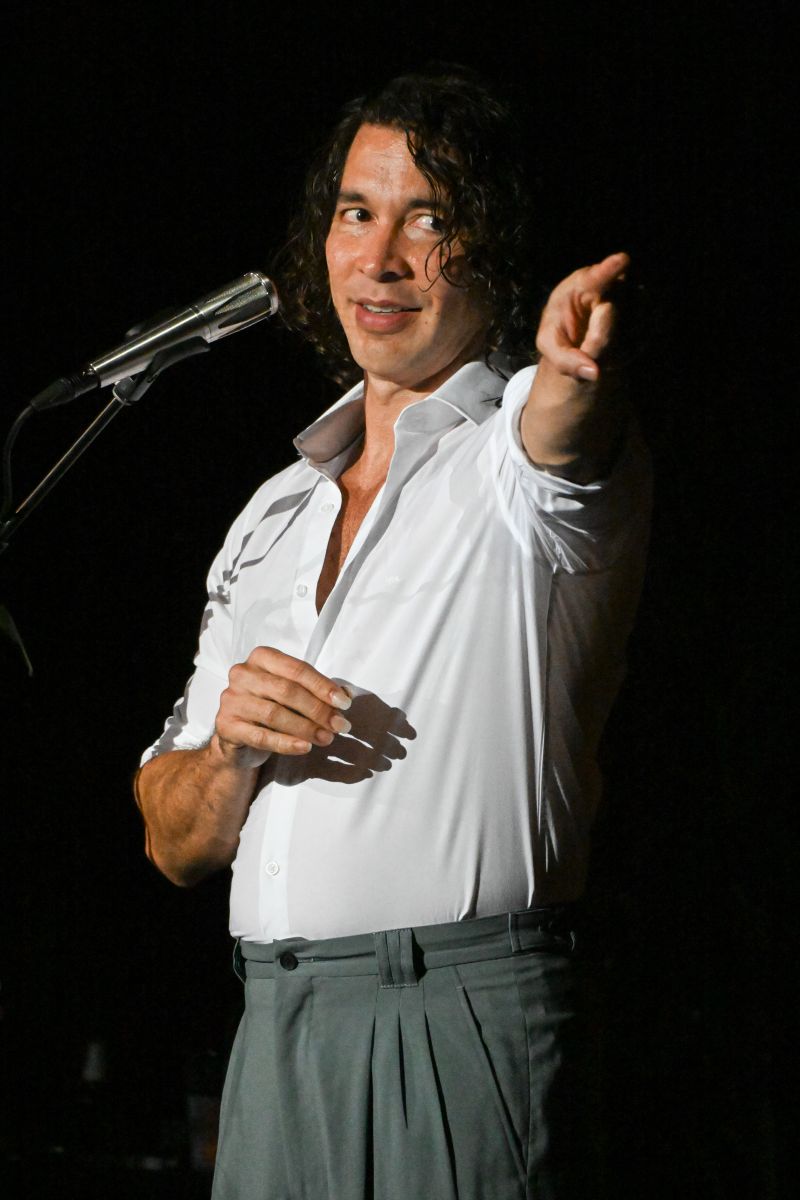
Never shying away from the opportunity to share his political views, Makana talked about rule of land ownership in Hawaiʻi and the many problems that stem from these rules and how they directly affect our lives. He shares a very different perspective of the familiar melody of Napoʻo Ka Lā.
From a very young age, he learned from Bobby Moderow Jr., the last protégé of slack key masters such as Raymond Kane and Sonny Chillingworth. Unwilling to walk the path of developing young artists even if it meant that his music was not in the mainstream of Hawaiian music, he needed to carve his own path where music was concerned. In the early days of his career, Kauaʻi was the only island that supported his music. Huge applause.
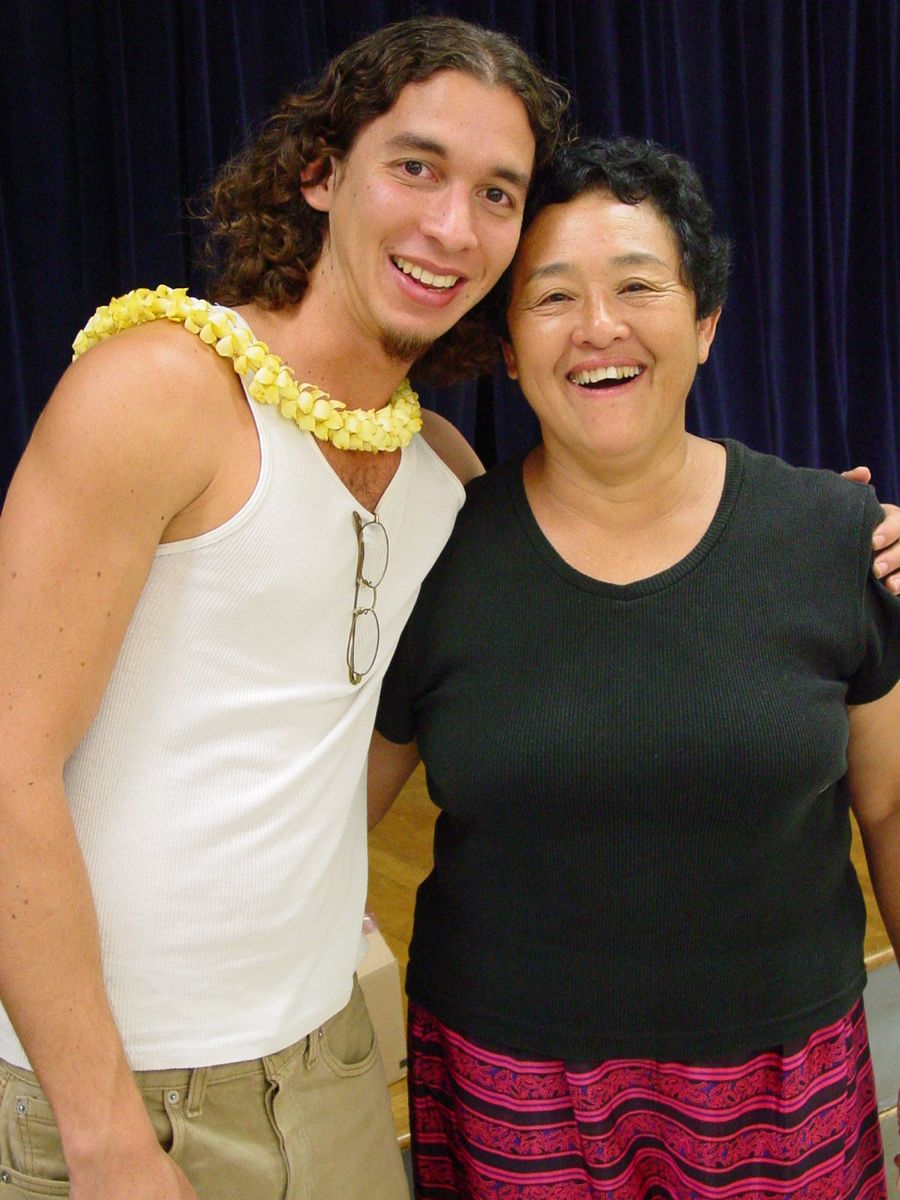
He first happened into the EKK circle back in 2005 when we were crowded into the Island School cafeteria. After viewing the Kīlauea Lighthouse sunset, he raced to Island School at top speed and made it to the second half of the program where he chugged a liter of beer in one gulp and shared his music with the EKK audience.
He acknowledged his close friend Evan Tector who helped him tremendously early in his career from over 20 years ago. He co-wrote with Evan the next song about individuals whose lives are affected by “rules” which are often imposed on them by the powers that be – persons displaced from Africa, persons who need to cross the border to enter the USA, persons from anywhere USA who try hard to fit into the “system,” and the fourth person . . . you decide who that is. Driven
is a song with a powerful and relevant message delivered with attitude for anyone impacted by these strangle-hold rules. Loud applause showed that the audience really tuned in and got the message.
Makana shared that it's hard to write a song about everything. Malia
is a brand-new song with ʻŌlelo Hawaiʻi words about masculine power that exists in our world today and its impact on the Maliaʻs in our lives. Malia is the pretty sweet one that we all know. He wanted to share his point of view on the background of his new song, a commentary about male domination in our society.
A woman in the audience named Malia wanted to lei him so he asked her to jump on stage and give him a lei, so she did exactly that. She jumped onto the stage in one gigantic hop. Now thatʻs a Malia for you.
As much as I try to follow Makanaʻs descriptions and motivations, sometimes, his ideas do fly over my head . . . definitely, some songs do take time and thought to be digested maybe a long discussion over a cup of coffee or a quart of tequila. He does leave you with a lot to think about on this and related topics.
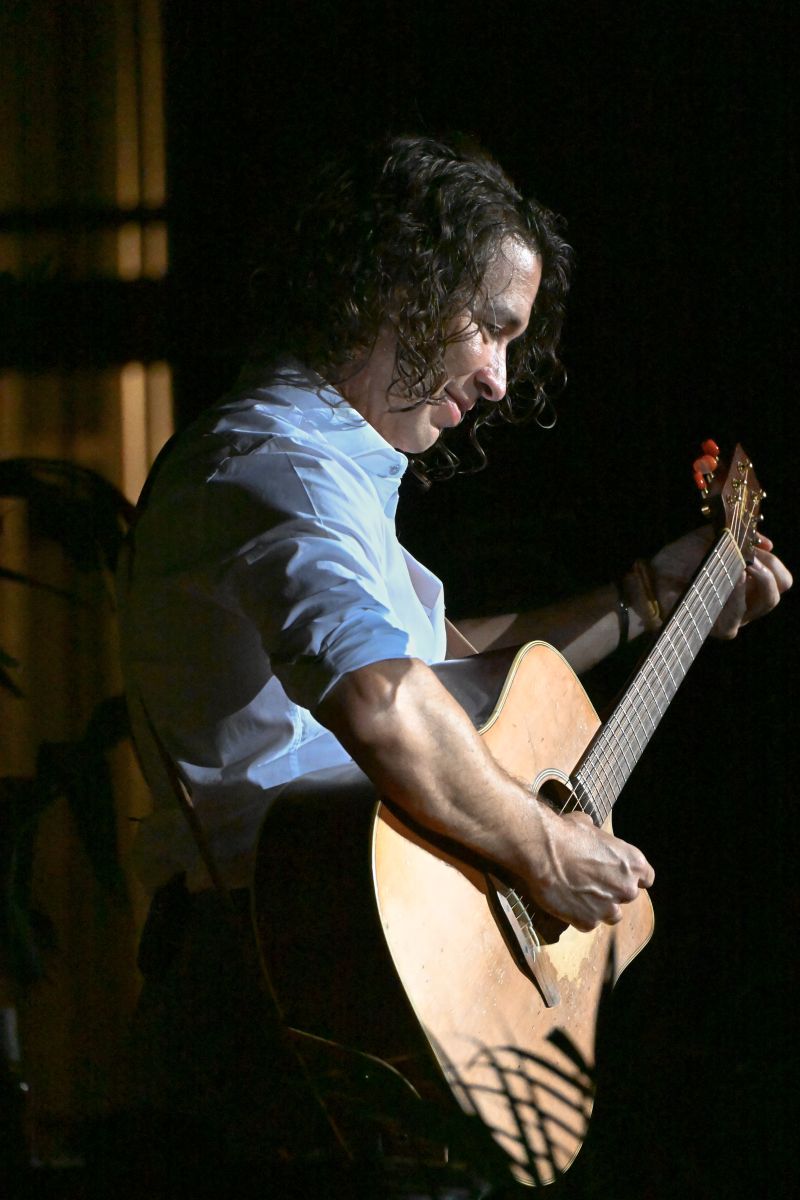
Makana wanted to share some background on the kī hōʻalu slack key, unique to Hawaiʻi, and perhaps quash the simplified stories about vaqueros bringing the guitars to Hawaiʻi in the 1800ʻs which are commonly shared by many artists. Questioning these folklore stories, he dug deep into the source with a friend in Chile and discovered that many of the early songs were actually from Santiago, Chile.
He gave examples of the typical slack key sounds by Raymond Kane of Nanakuli. Raymond Kaneʻs style was passed down to him by his first guitar teacher Bobby Moderow. Later when he studied with Uncle Sonny Chillingworth, he found that Sonnyʻs style, influenced by music from so many different sources, was quite different from that of Raymond Kane. In Hawaiian music there is a vamp . . . he shared a very familiar sound which everyone recognized as the Keola Beamer vamp.
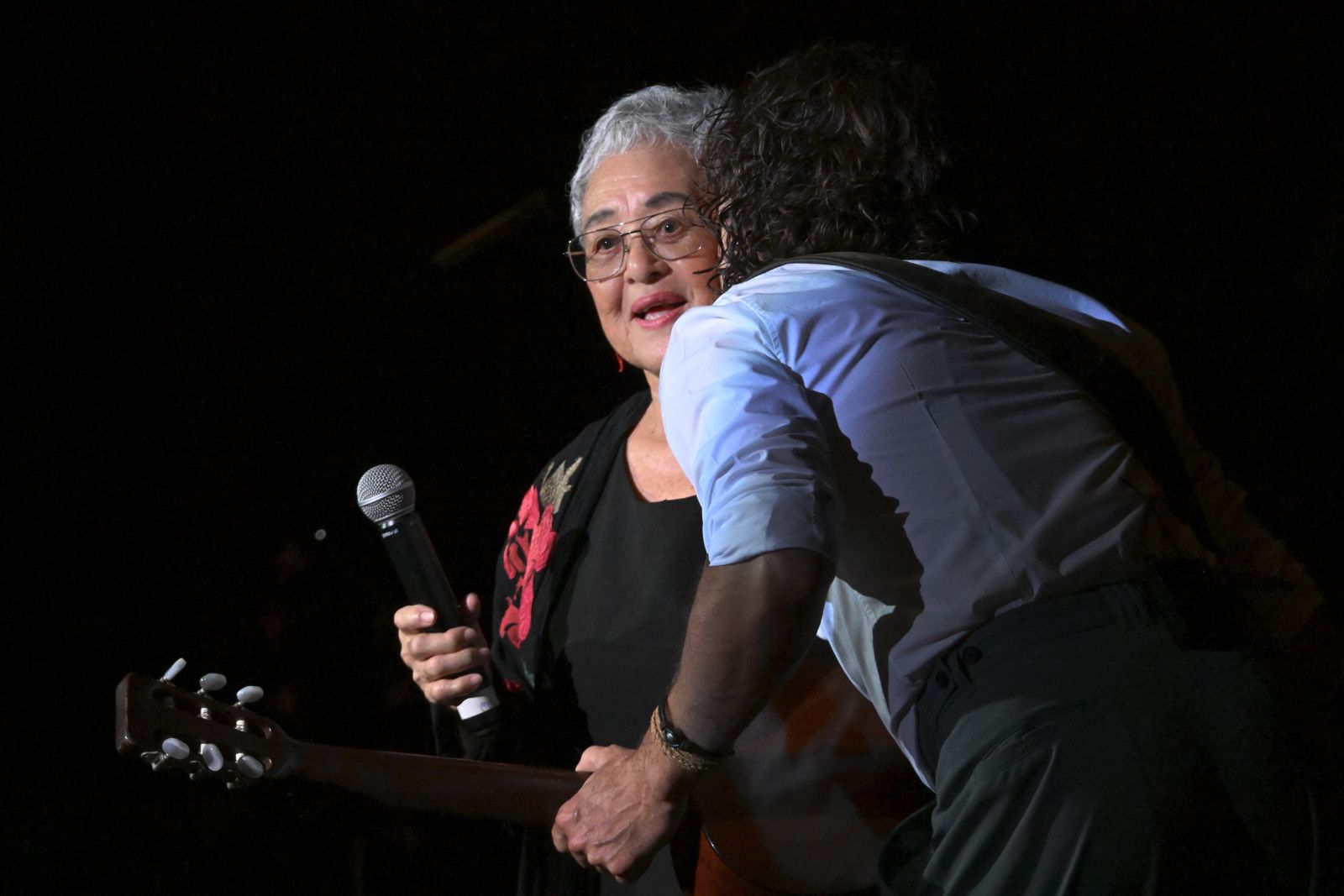
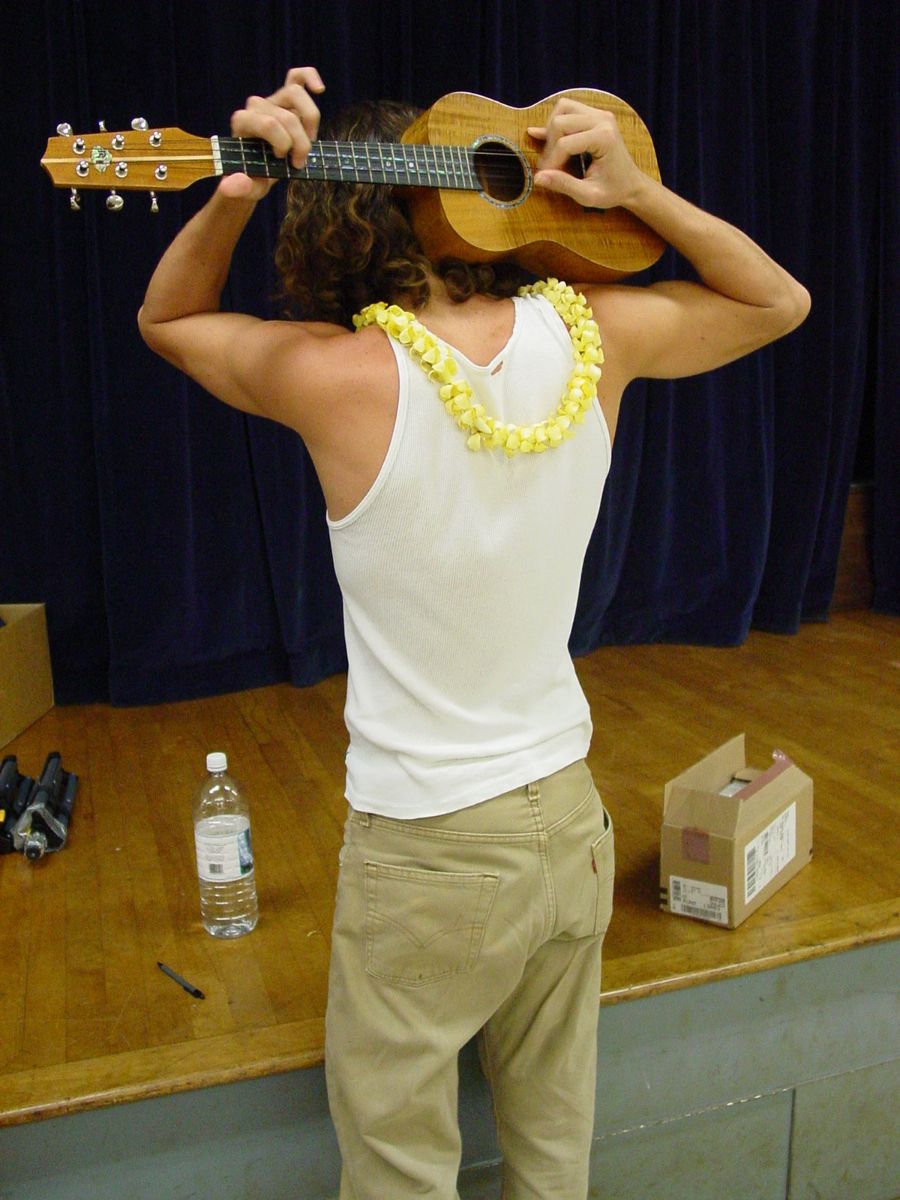
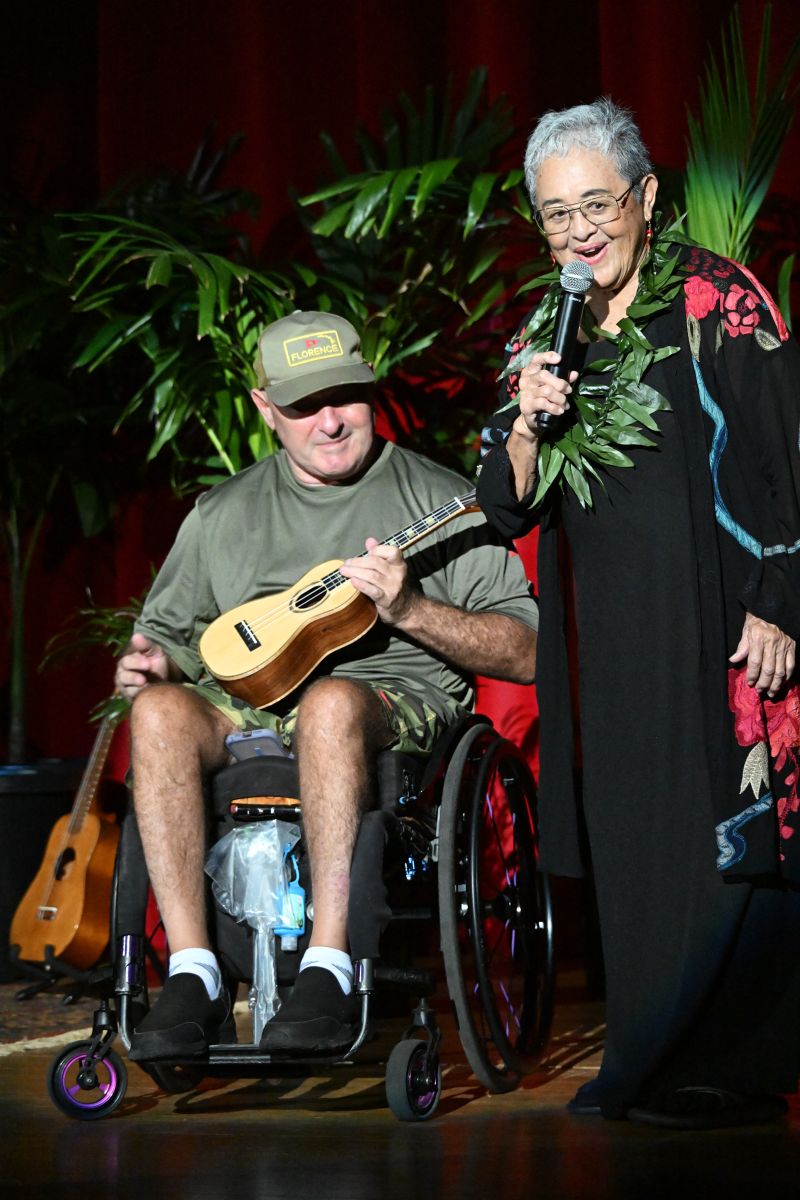
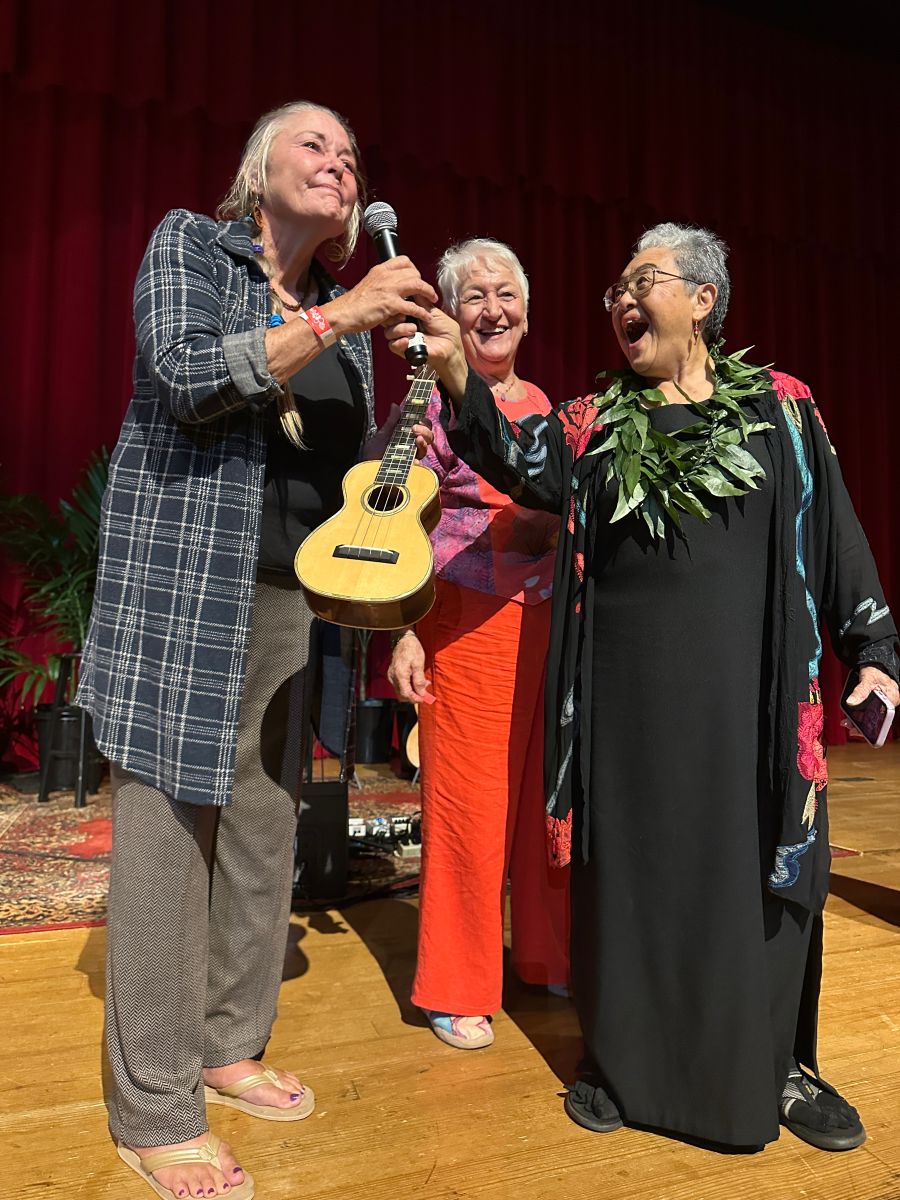
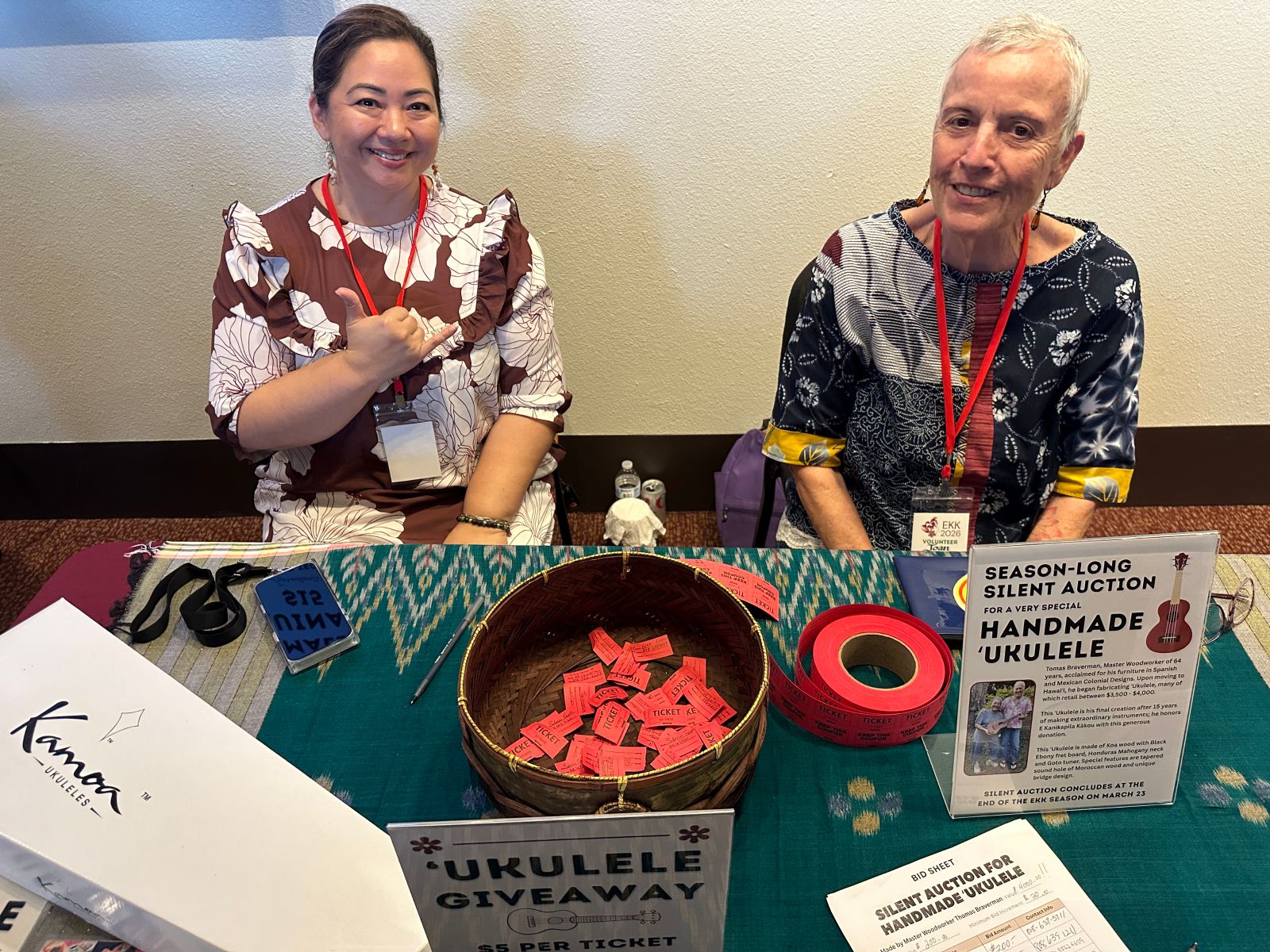
You can also play slack key on the ʻukulele; he then called on Carol Yotsuda to put in a plug for the ʻukulele giveaway. Carol interrupted the show with a short demo on the Kamoa ʻukulele by last weekʻs winner of the Kamoa ʻukulele, Eric Lazar. She also shared a huge plug for the ongoing silent auction for a fabulous koa instrument created by Tomas Braverman of Anahola. Right after the intermission the latter will be given away to the highest bidder; and the lucky number will be called for the Kamoa ʻukulele.
Fire and Rain,
written by James Taylor, a powerful number delivered in his signature style of playing the guitar was performed right before the intermission.
INTERMISSION
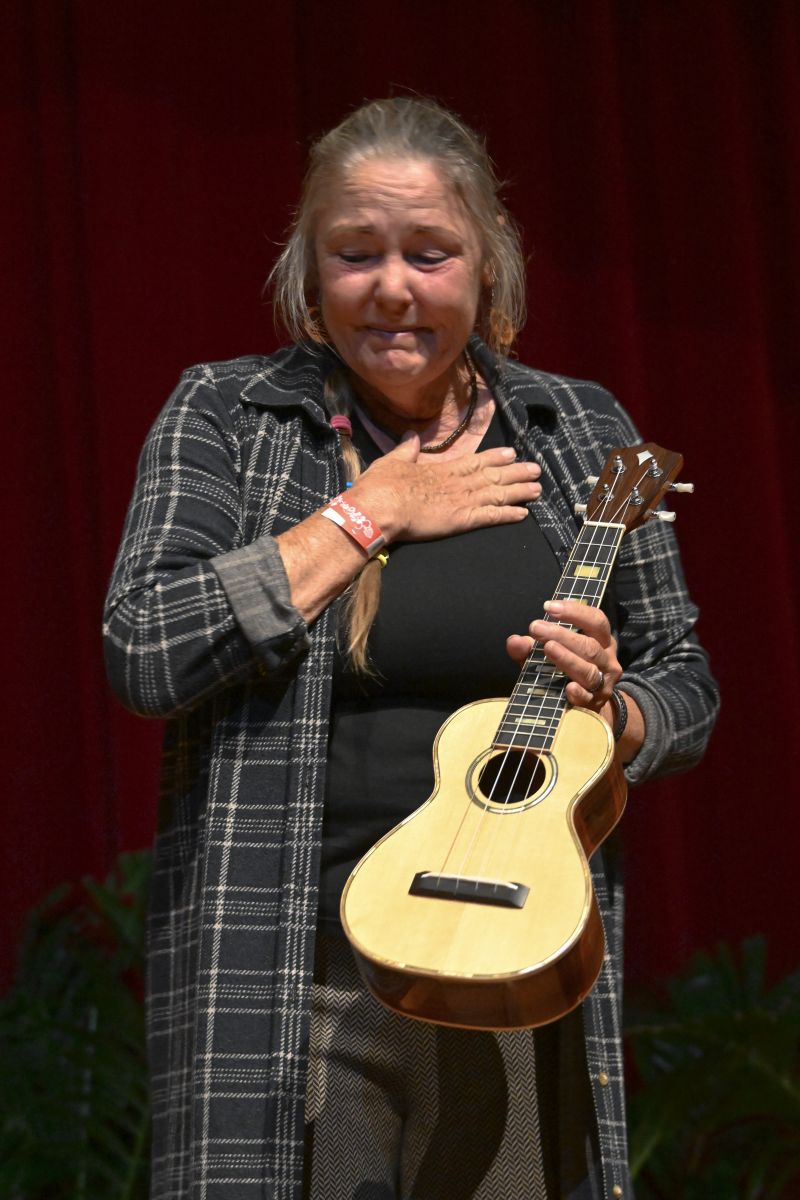
Winner of the Kamoa ʻukulele was a lady from Lahaina who was among the residents who lost everything. She was totally bombed by her good fortune and shared her very emotional appreciation for the show of aloha and this serendipitous gift when she was here visiting her longtime girlfriend who was also a longtime friend of Makana. What a tearjerker!
Winner of the Eating House 1849 $100 gift certificate was a Danny.
At 7:30 the top bidder for the Tomas Braverman ʻukulele was announced and it was none other than Major Inch who never strayed too far from the auction bidding sheet. He deserves it and he also needs to take ʻukulele lessons.
Back to Makana and the concert! Makana wrote this song Maharina
, a humorous song about making love in every possible situation – in the moonlight, in the rain, in the garden, on the table, or on the stairs. etc etc etc. About week and a half ago, he wrote a song titled Tel Aviv
probably about a relationship and who got the final word.
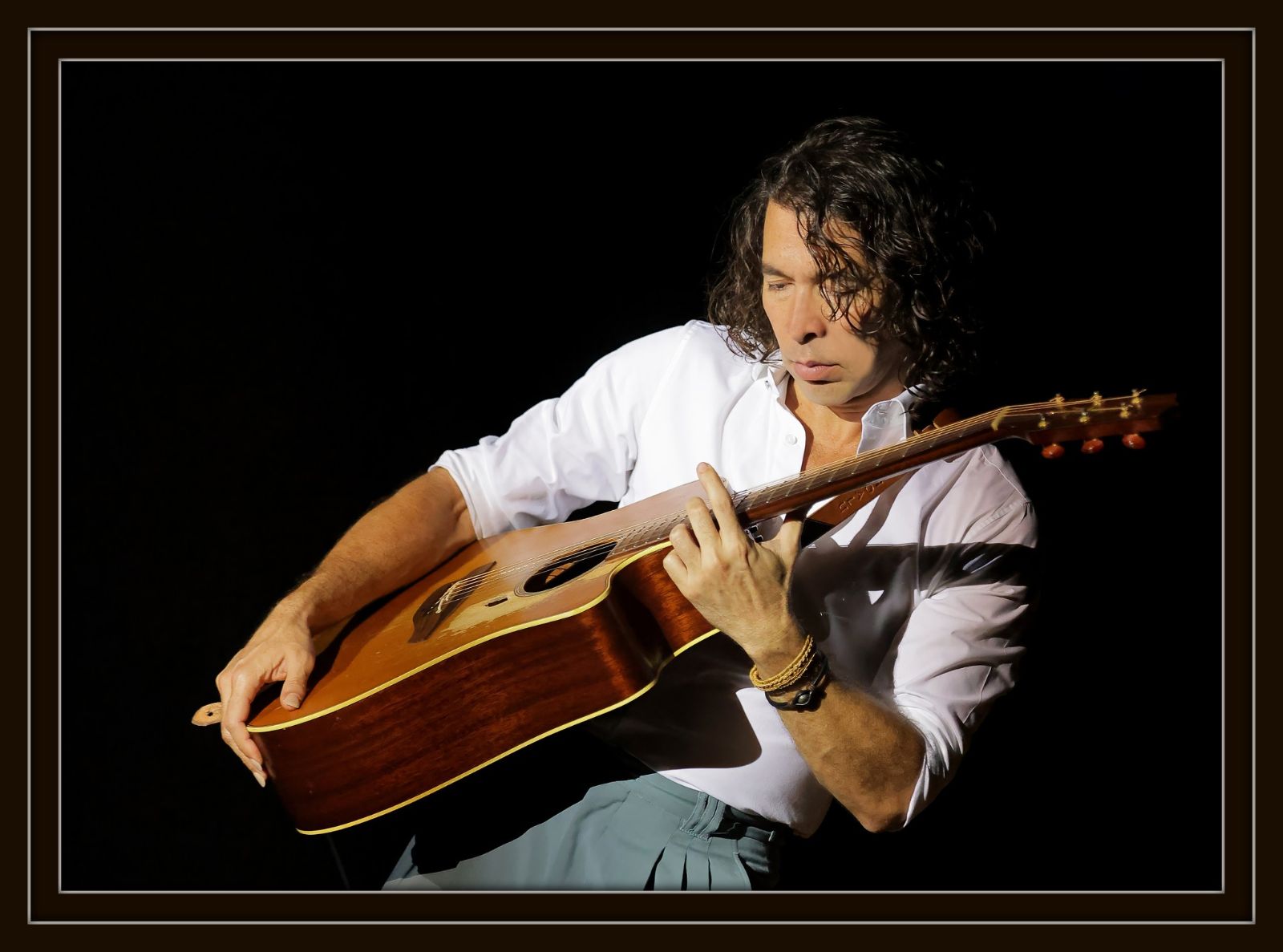
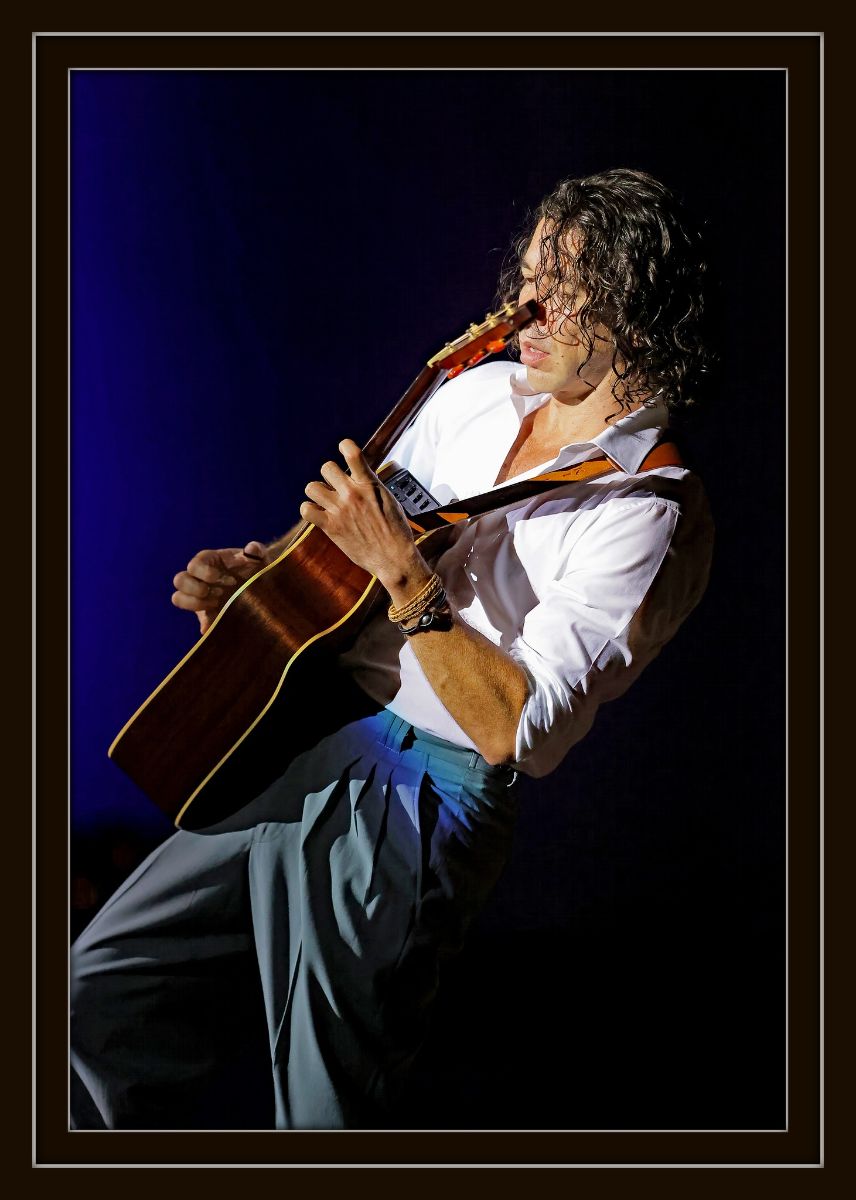
One of his most outstanding slack key numbers and very, very long instrumentals is the song Koi
; it makes his guitar sing and the audience loved it. It definitely leaves an impression on whoever is watching the performance. “ That is slack key!
”
It reminded me of one of his performances at Anaina Hou where my 3-year-old guest sat in the front row with me . . . all eyes and all ears . . . watching every move that Makana made. As soon as he got home that night, he had his Mom take out a low platform for him to stand on, had some kind of backdrop set up behind him, used a vertical stick on a stand for his microphone, strummed his little ʻukulele and started to do all his fancy steps back and forth, paused every so often to take a drink out of a cup, and pantomimed the night away. On his next visit, he showed me the Makana moves as he internalized it. Young lives are very impressionable.
Hana fo’ da Luna
: Translation: Working for the boss.
On one of his tours, he stayed at Maunalani Resort on Hawaiʻi Island. The room key would not work; he tried several times to open the door but it would not work. The hotel room door was stuck and after an hour and a half of everyone trying, he changed rooms to sleep with all his stuff stuck in the first room. He told a long story about trying to open the hotel room door with the help of a locksmith from Kalihi which has its own colorful conversation…
Next day, another locksmith showed up to continue the work; he ended up talking stories with Wendall, a bruddah from Waimea on the Hawaiʻi Island, and even did a one-hour concert for this guy who was blown away by it all. After an hour, they were “cuz”; it moved him to write the next song. Makana noted that hotel workers need to deal with all kine guests, so this next song, which is in Pidgin English with very intense instrumental, goes out to all the people who work in the hotels. A master at making the guitar sing, this song drew the biggest applause. “That is the slack key way!”
When he was playing at the Palace theater in Hilo, he asked, “Are there any billionaires in the audience? This is a song about killing you.” When he was watching the Black Orpheus movie, he loved the samba music and Brazilian music. He loves the happy lighthearted sounds of this song but itʻs called Bossa Guillotine.
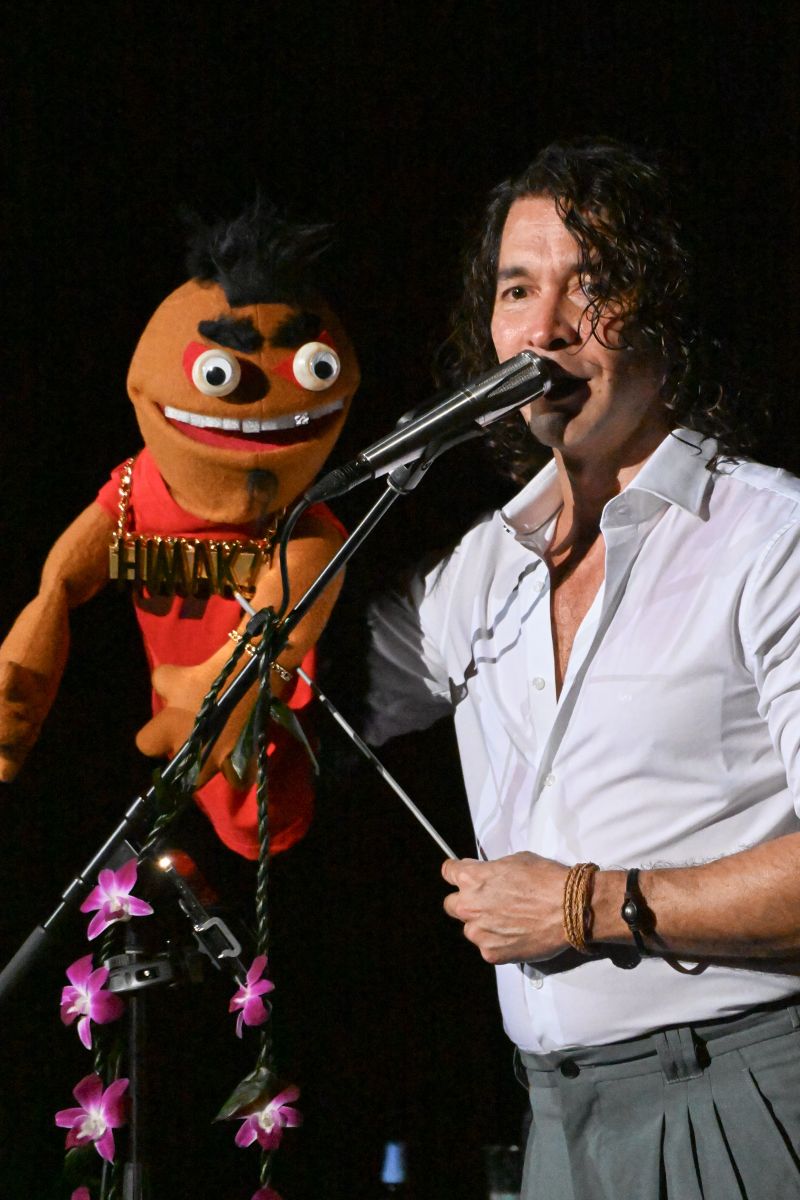
Makana said he loves to share his stage with up-and-coming young artists, and his assistant walked in with one of his little puppet friends who speaks Pidgin. Accompanied by his assistant Asia on guitar, Makana did a Pidgin rap to Aloha Means Goodbye. . . not as a ventriloquist but speaking the voice of High Mox, his puppet friend. He apologized if anyone got offended but it was intentional; just blame his puppet friend.
Makana pointed out that the Coconut Wireless runs rampant on this island; some people like to talk behind your back but I like to talk right to their face.
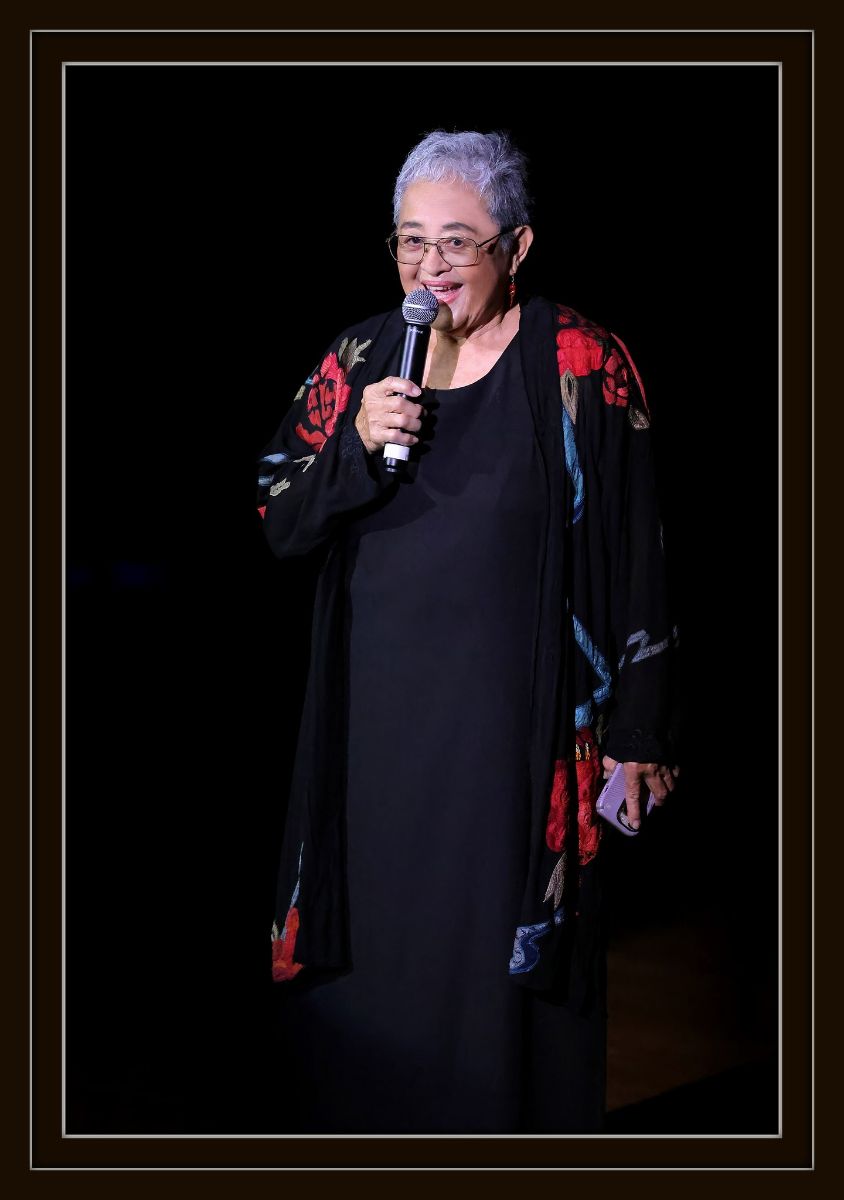
He began to talk about Carol who has been involved with E Kanikapila Kākou for so many years (actually half her life). EKK is like being in a sunny place – inspiring, nurturing, safe, valuable, special. To love and to help someone is to step out of your comfort zone. He pointed out that there is no program like EKK on other islands, so we need volunteers to make sure that this continues. Carol is not Hawaiian; she lived in the Japanese internment camp as a child. He talked about seeing Carolʻs art work in Honolulu several months ago and was blown away by the work. He said he needs to meet with the EKK volunteers on how to keep this program going because it takes all of them working together to continue.
The best part of this unsolicited plug for volunteers to keep this program going is that following the concert as we were rubbing elbows with fans in the lobby, several folks with genuine interest in their eyes said that they would like to sign up as a volunteer to be involved in making this happen again. Yaayyyy!
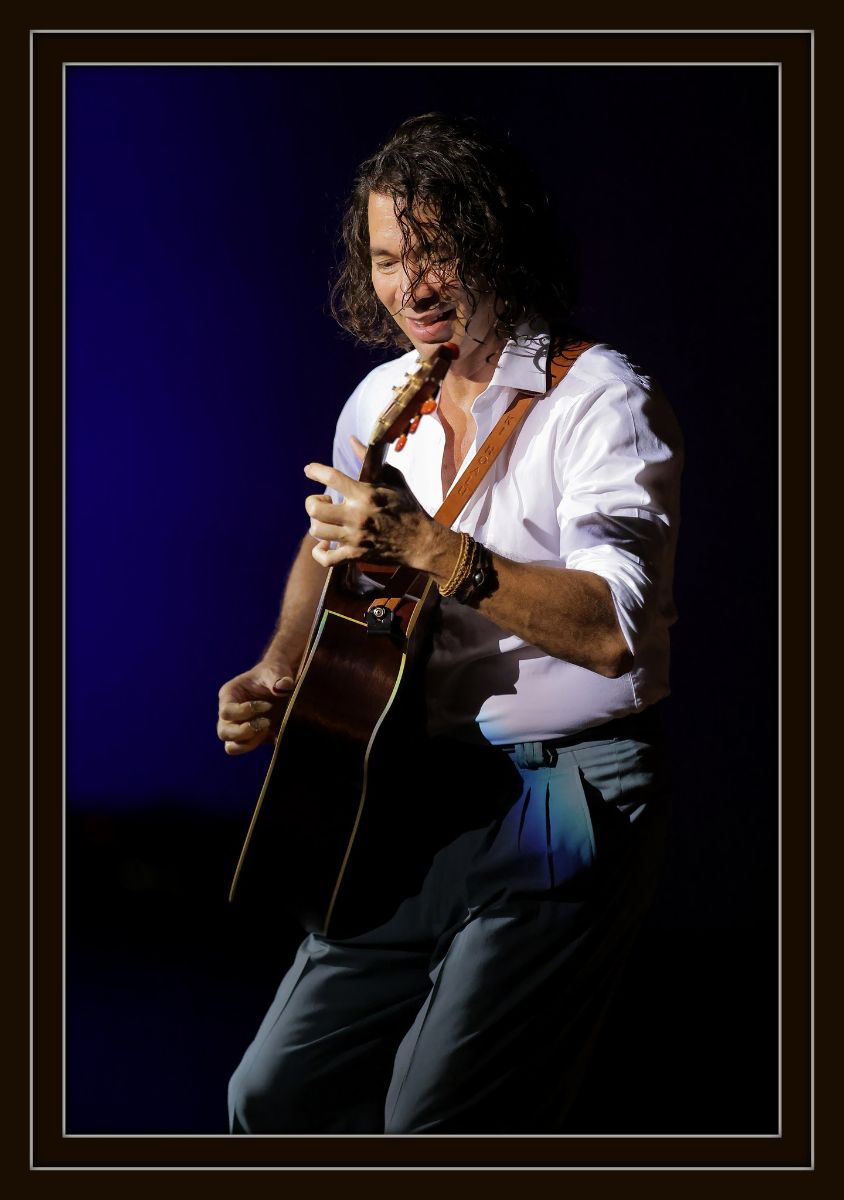
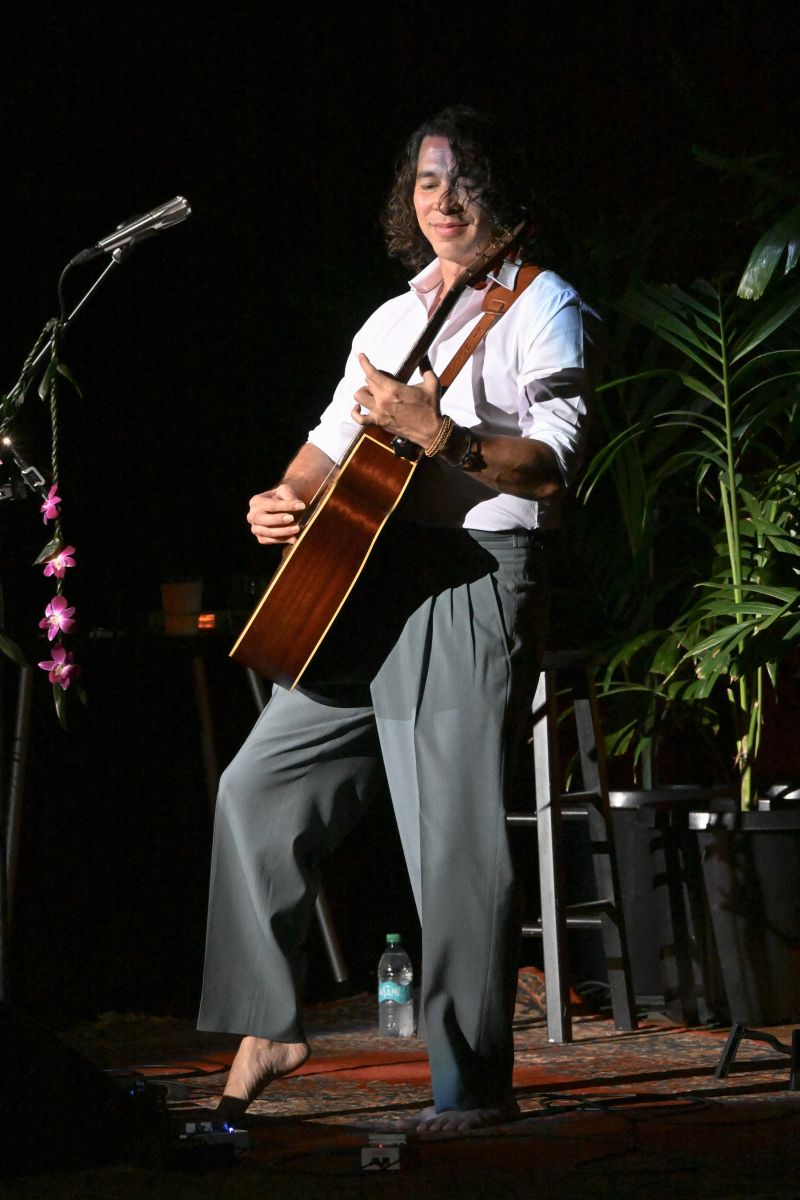
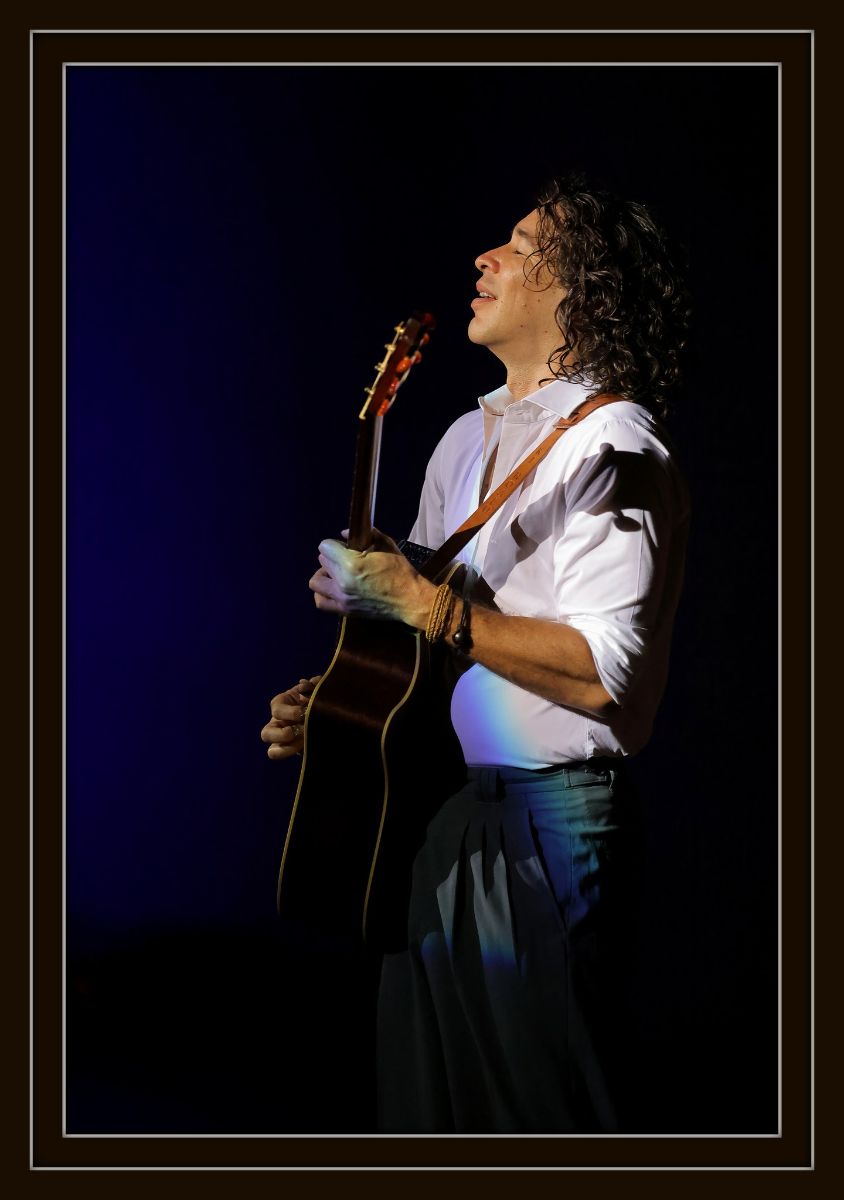
He followed this plug for EKK with what has to be my favorite of all the songs that he sings -- Kuʻu Lei ʻAwapuhi. This song is for Jessie girl. Makana walked to the front of the stage to play this song in which he really shows off his moves. For many this song was really the highlight of all the inspiring numbers. No one else sings this song quite the way that Makana does.
Addressing another one of his favorite topics – conflict – Makana states that in order to make a change, we need to not organize by identity but organize by shared needs. We need to understand that or itʻs all over.
In his dream years ago in which he was trying to find the beach access, but without success, he broke into one of the mansions to get there. Sadly, he could not find the beach no matter how much he searched; there was nothing there except shells. Mansions are like empty shells; no one is ever home. This song was written after he woke up from this dream -- Shells.
Makana at this point switched to the ʻukulele for his accompaniment; the simple accompaniment to this song made it all the more poignant. This song is the big dream about mansions but there are no beaches in sight in this beautiful song.
Makana.media
is the only place where one can get this song. Wow! This song got a rousing applause from the audience; they were really blown away by this . . . shouting Hana hou! Hana hou!
Like being Deep in the Ancient Forest
for opening the concert, Blue Water Dolphin
is an instrumental about swimming with the dolphins in the blue water; it again grounded the audience as the final concert came to a close.
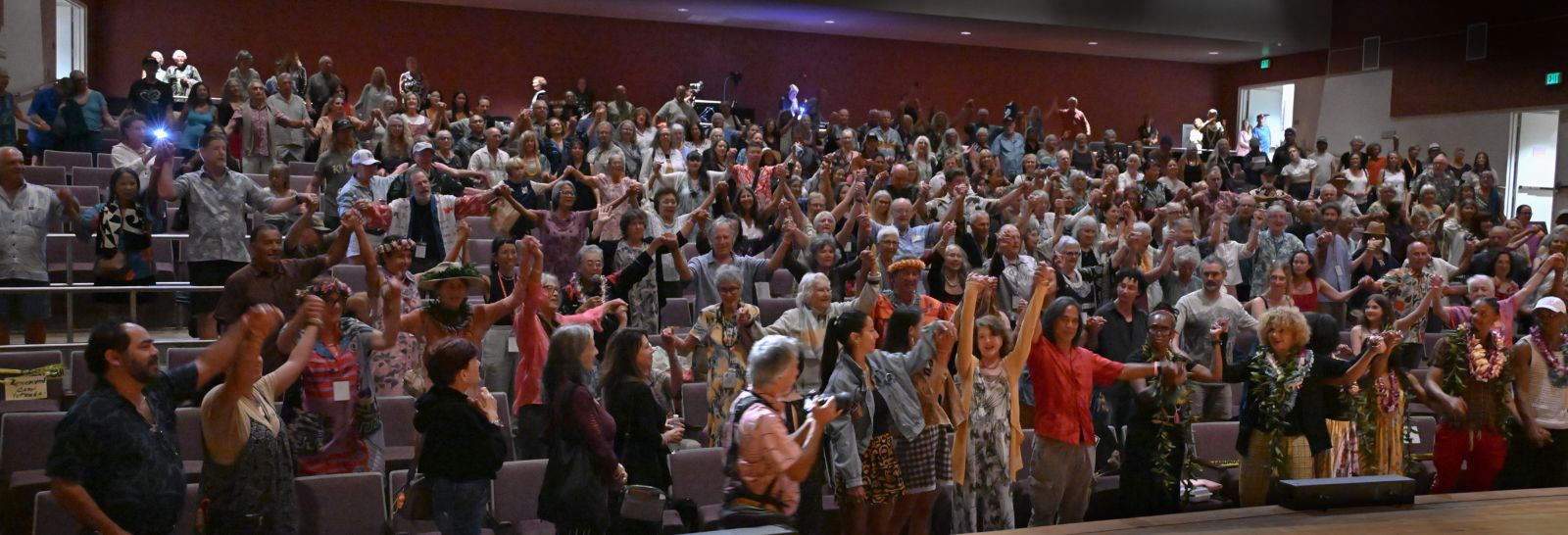
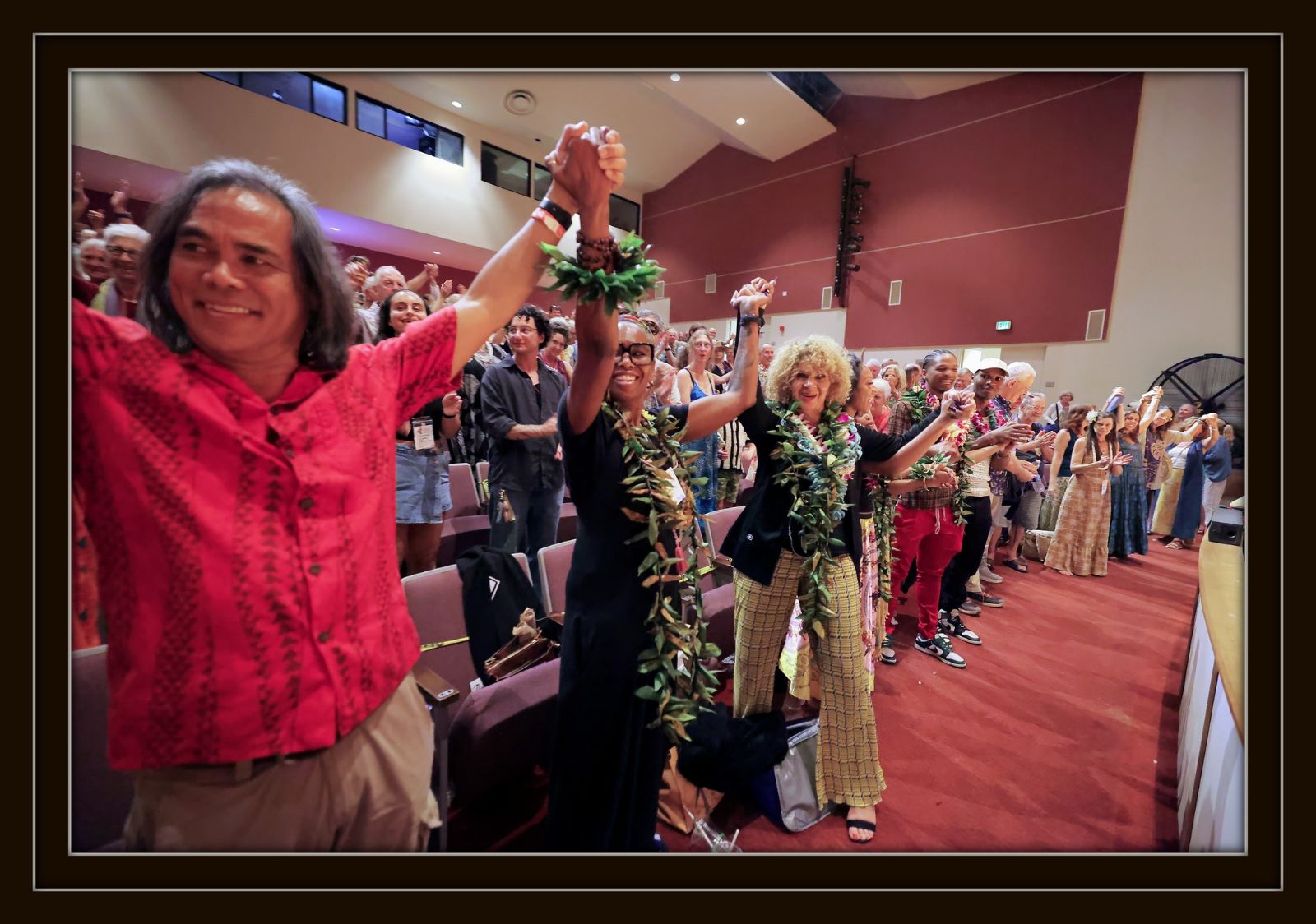
Sabra Kauka led the audience in the Oli Mahalo
followed by everyone holding hands and singing Hawaiʻi Aloha
for the last time this season.
Itʻs been a long run but a really special concert series and topped off with an unforgettable performance by Makana, one of EKKʻs staunchest supporters. He leaves us with these words:
Aloha is a shared joy in letting go of the need to center one’s self.
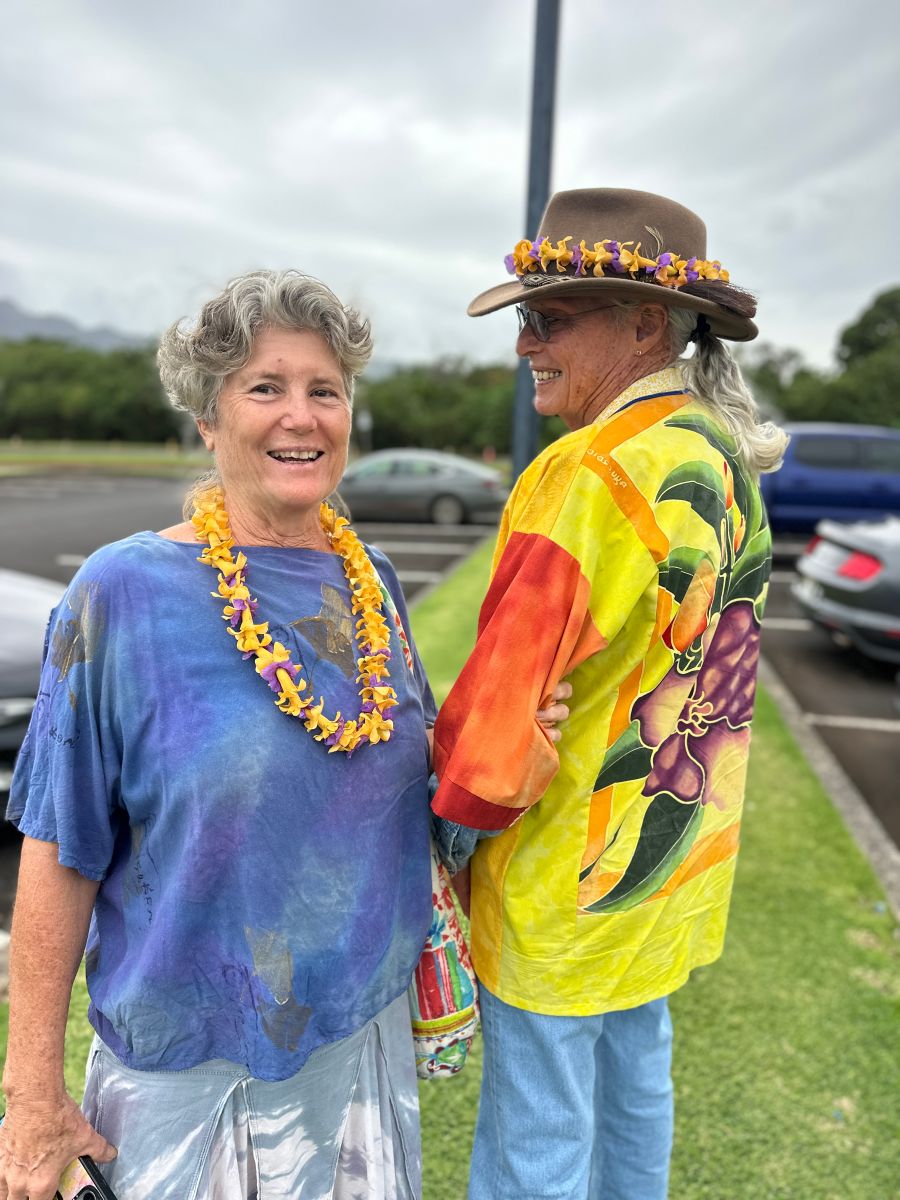
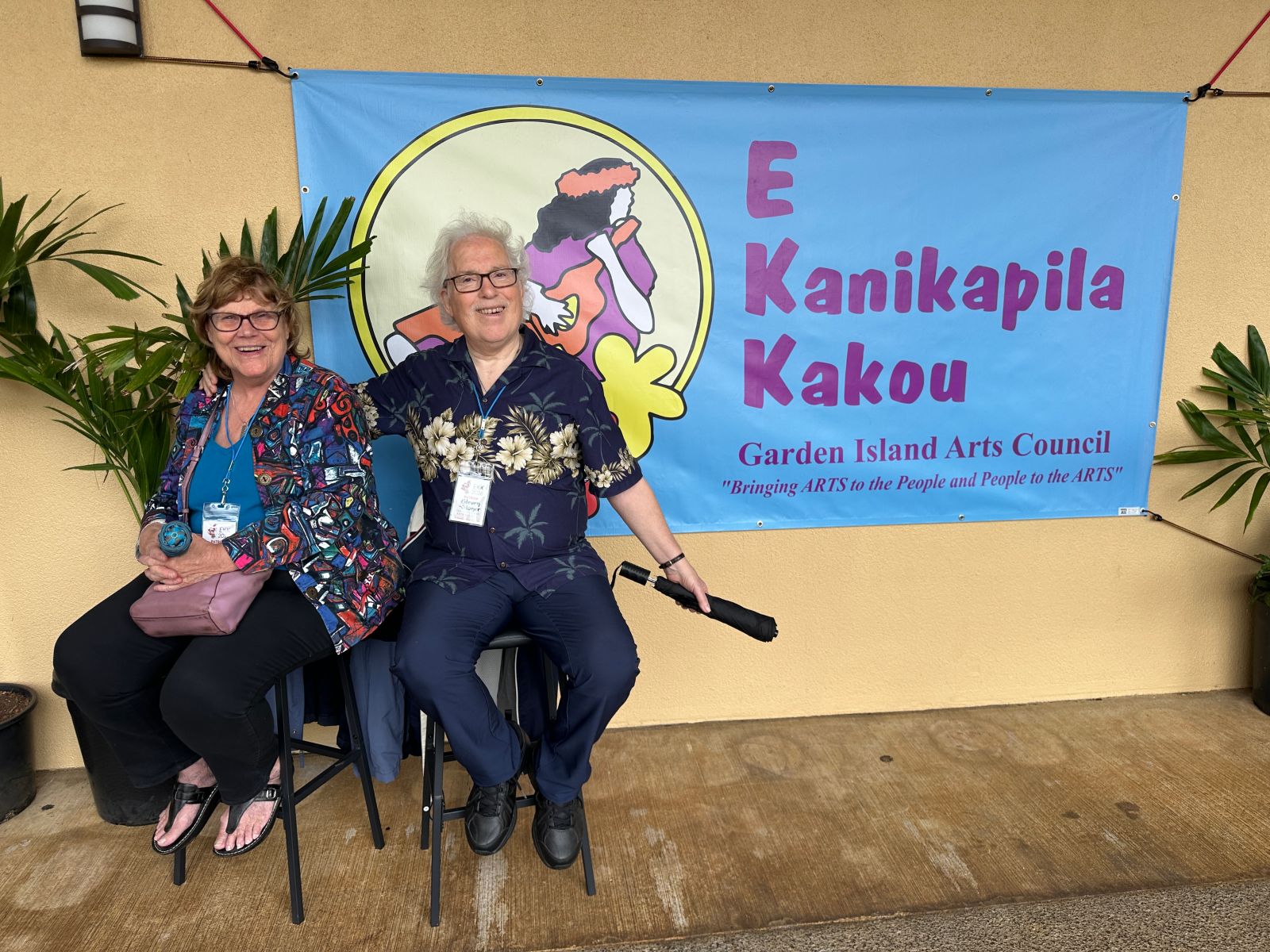
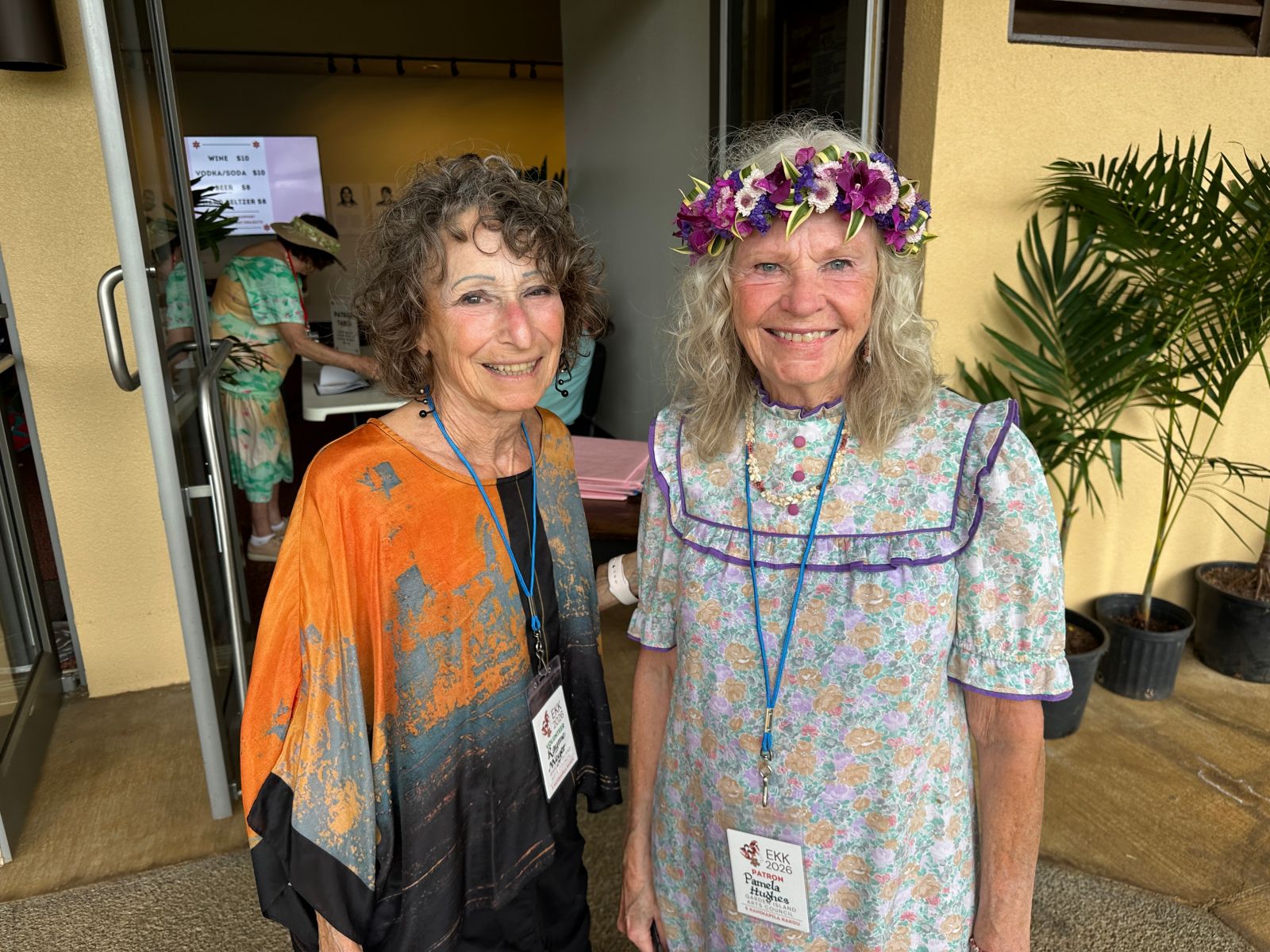
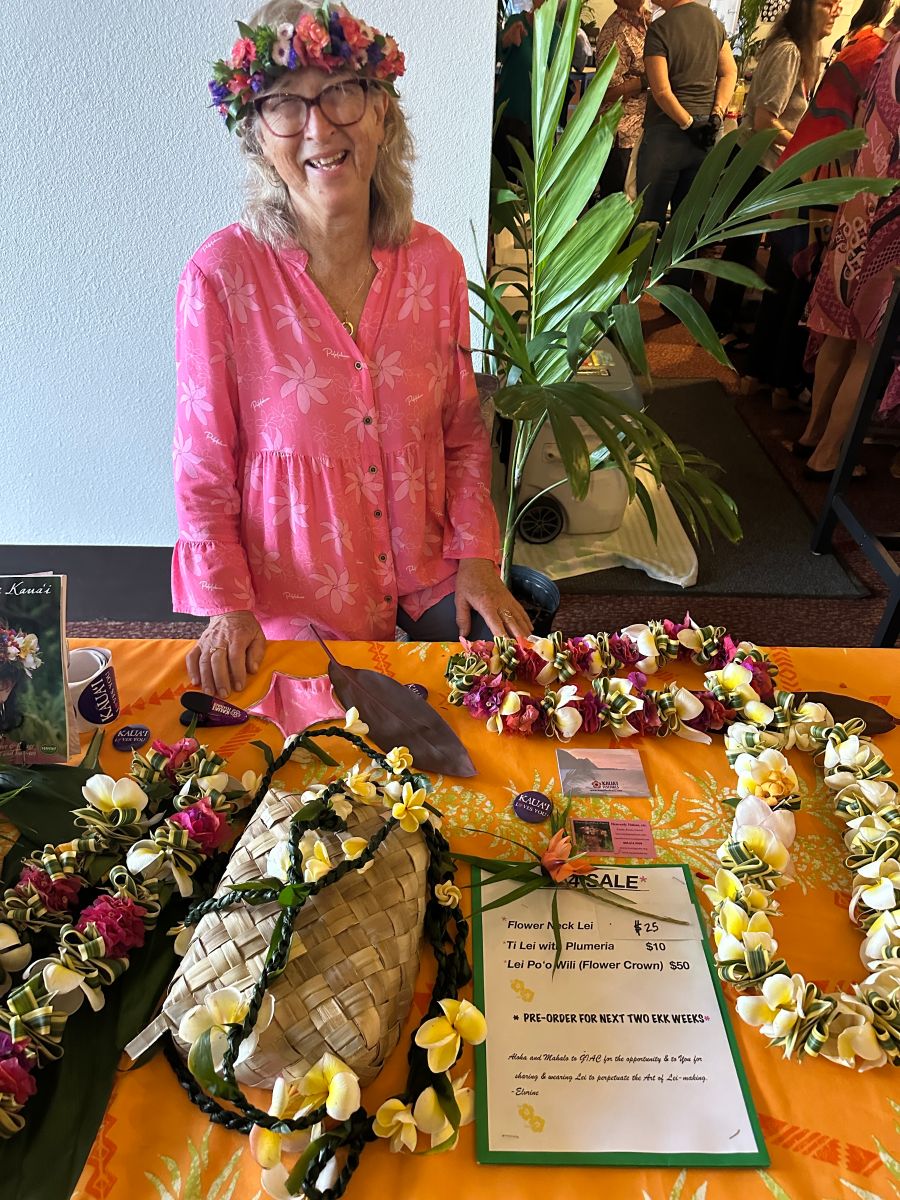
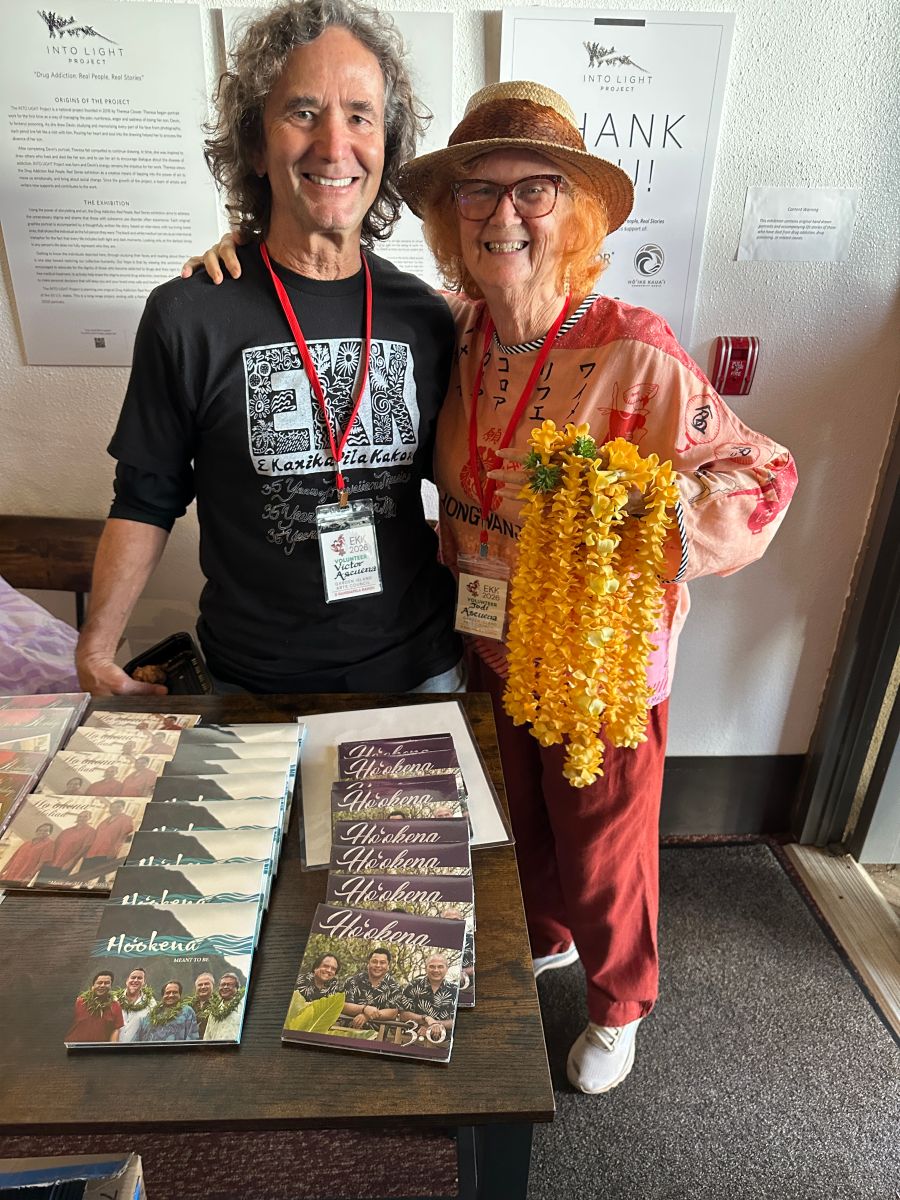
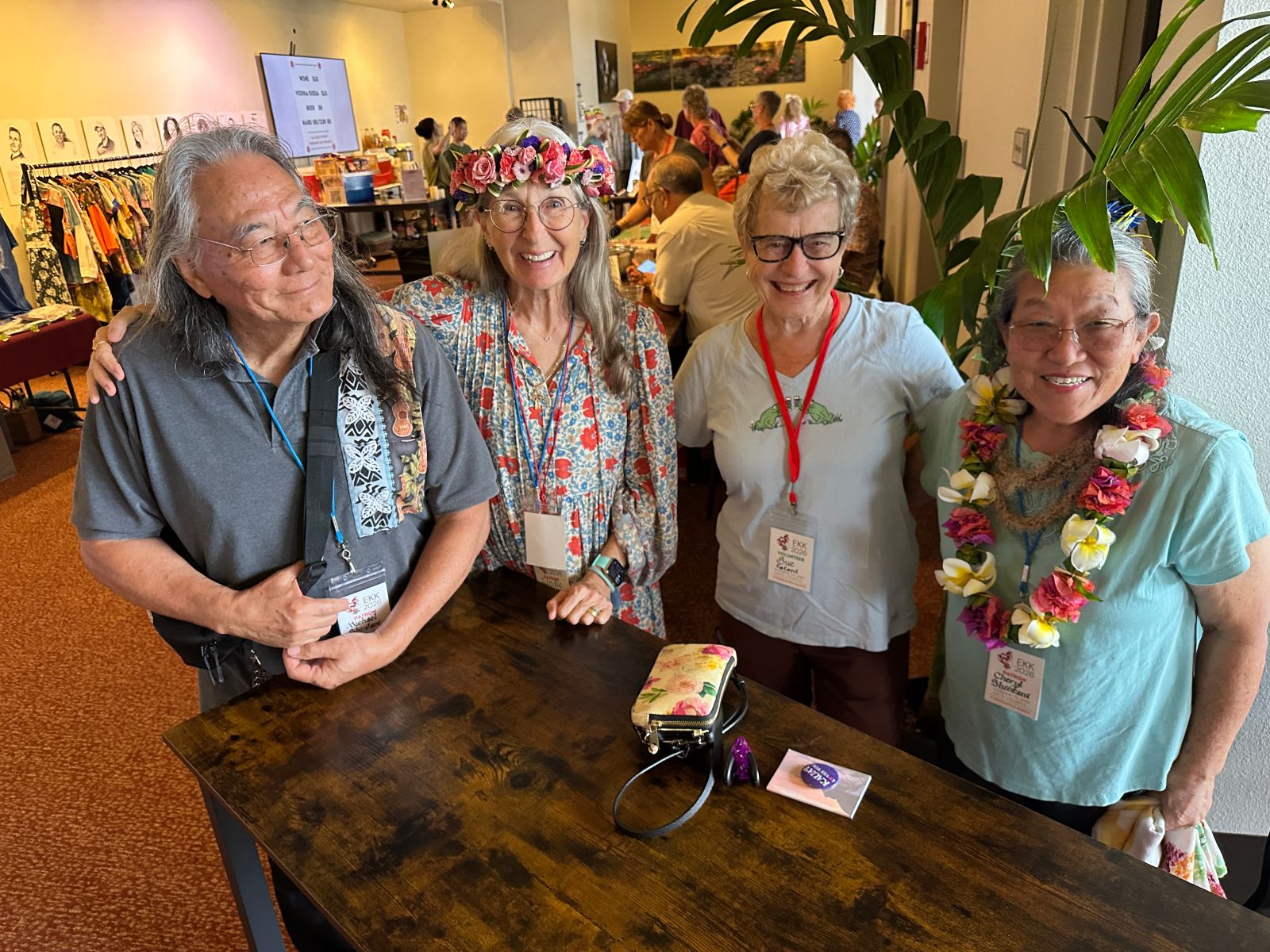
Photos of EKK loyal fans
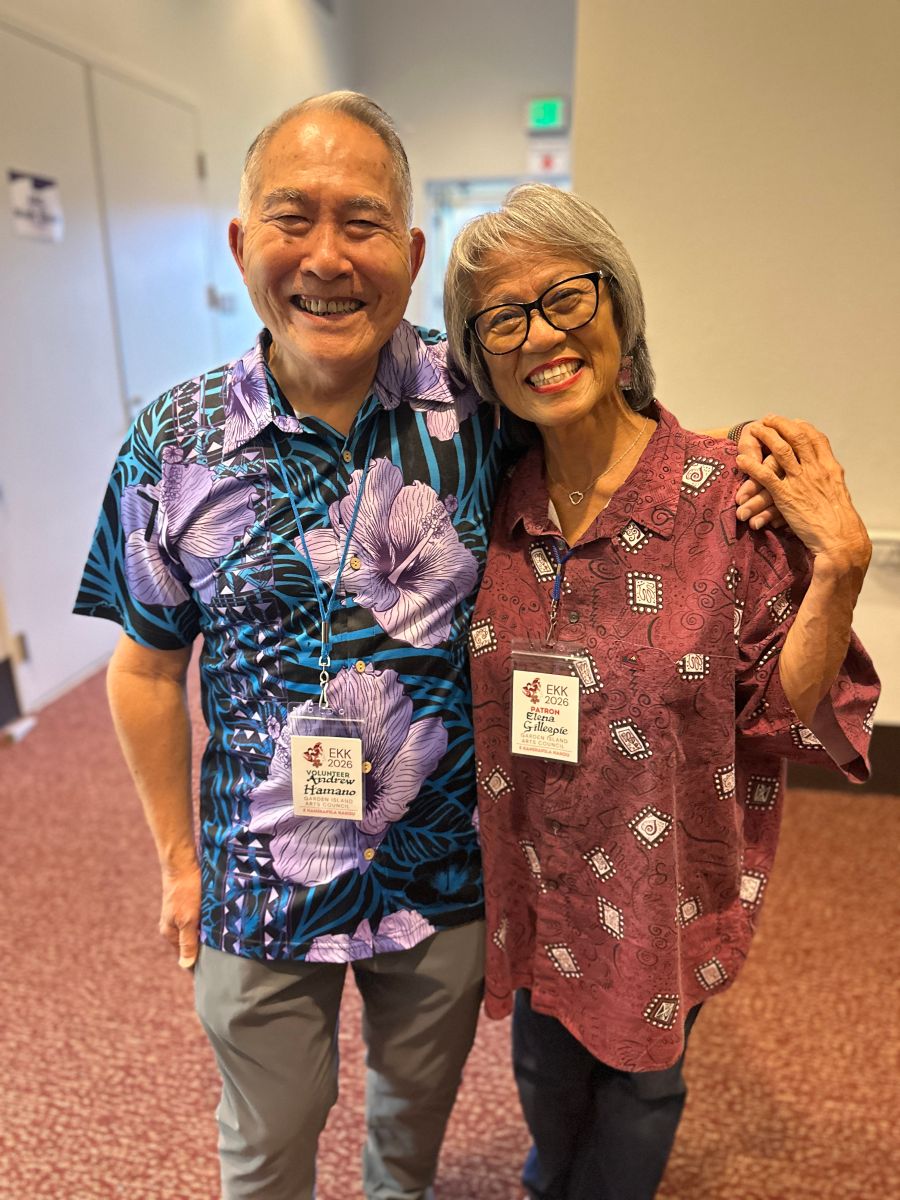
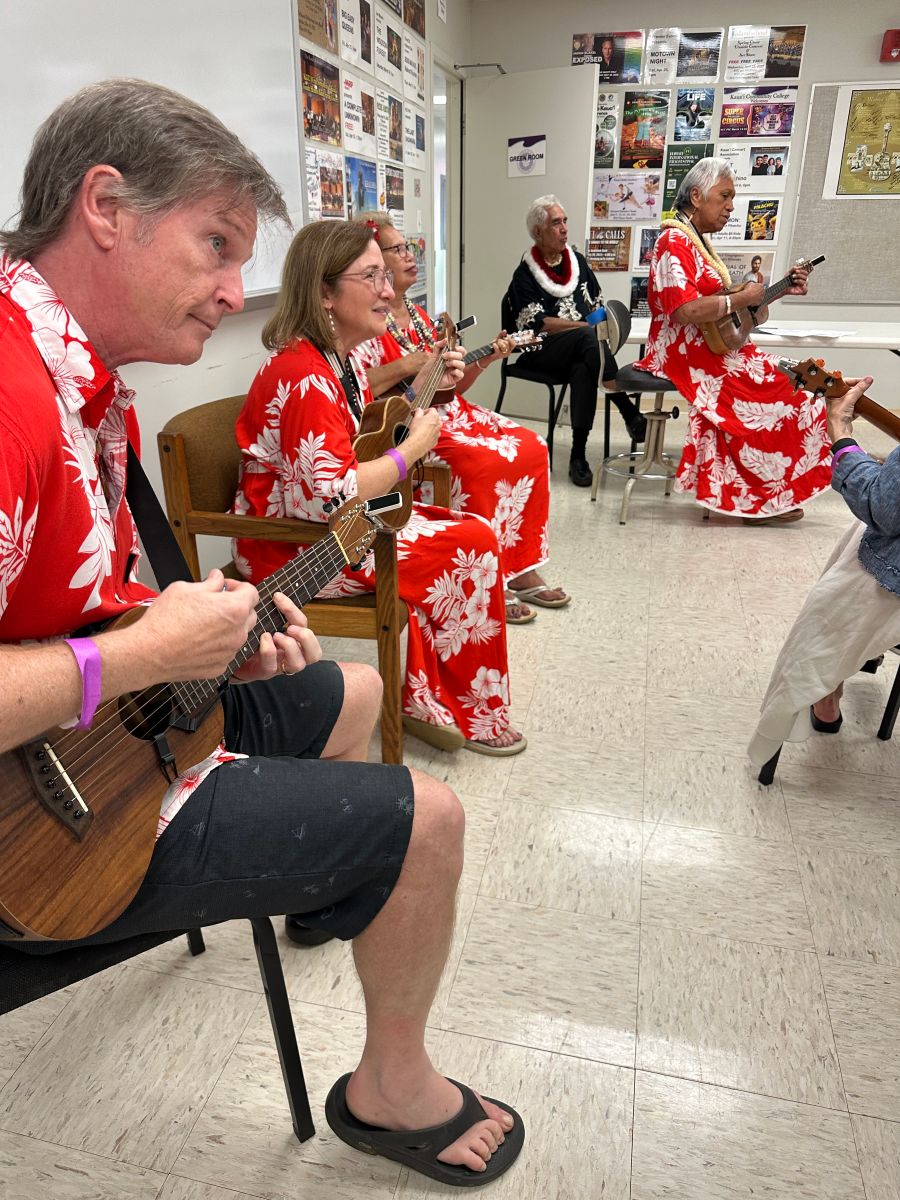
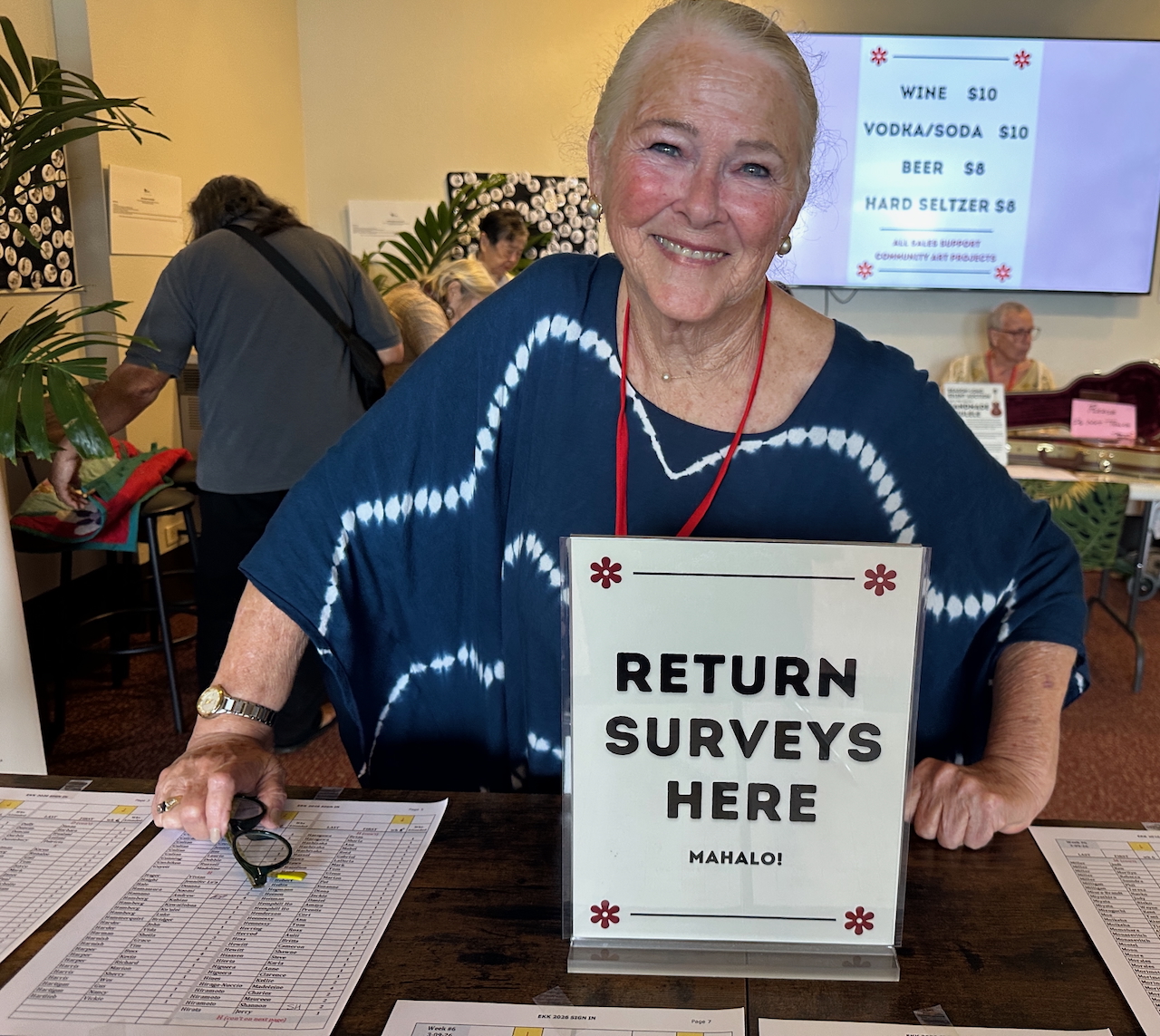
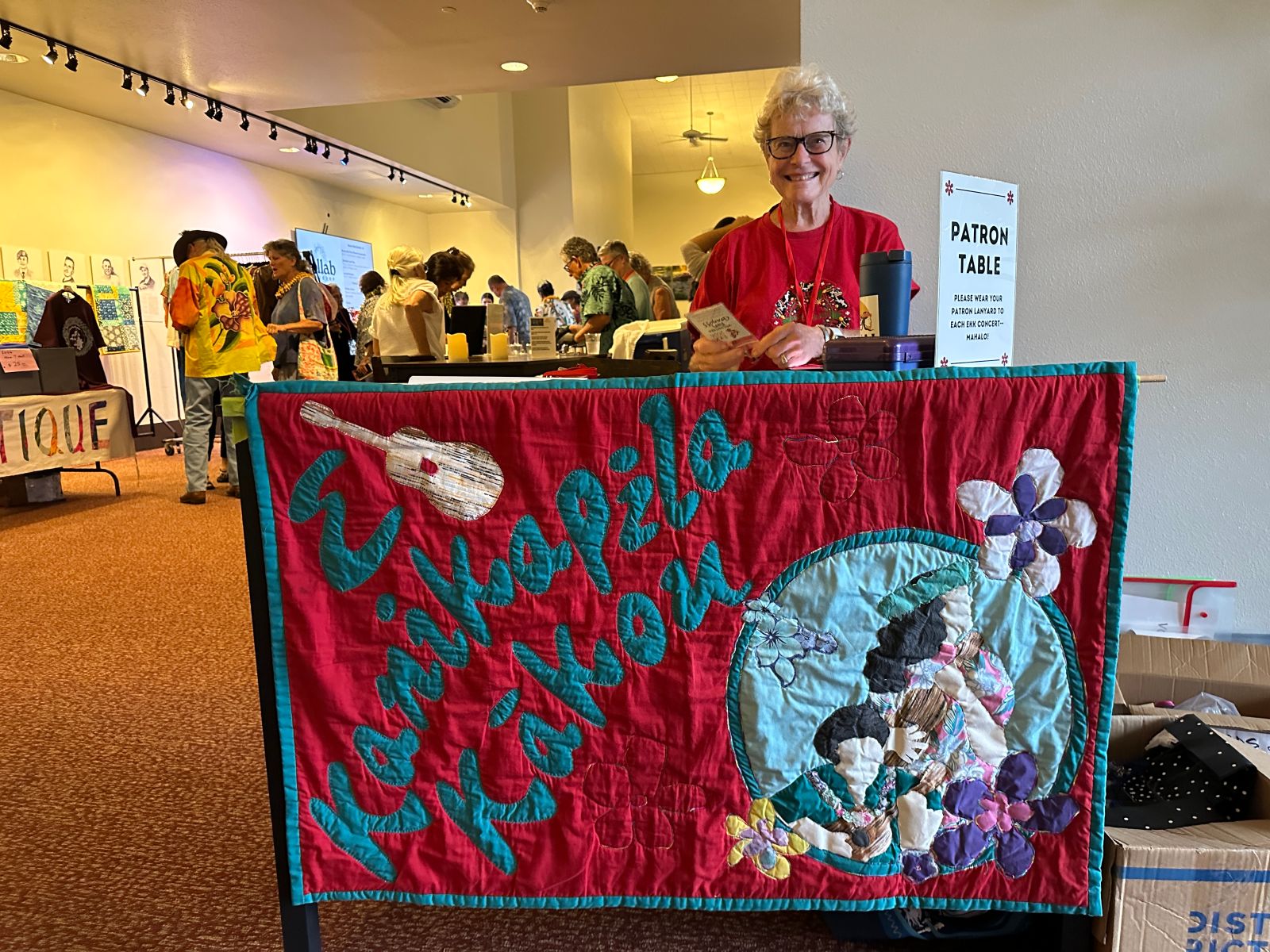
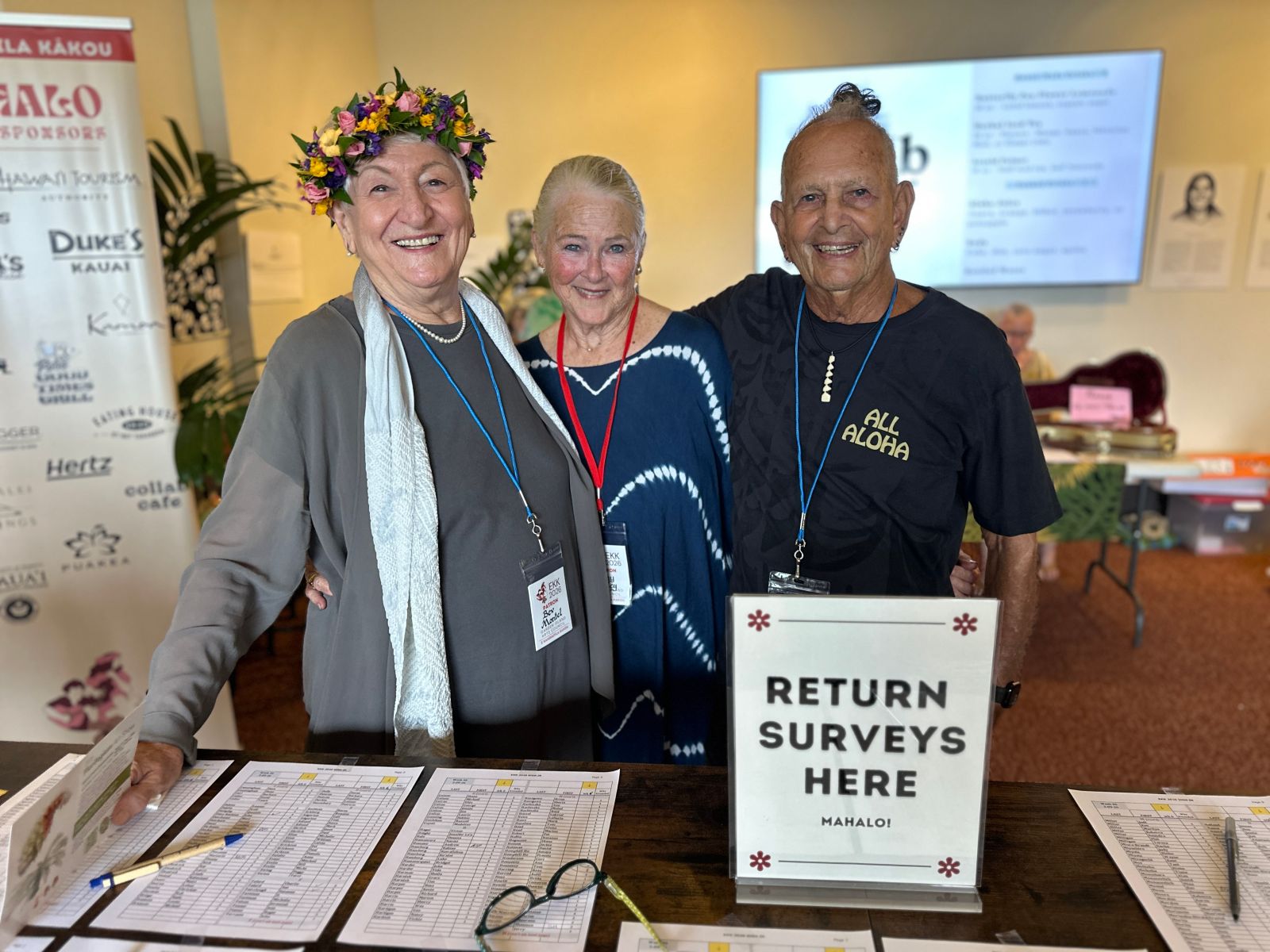
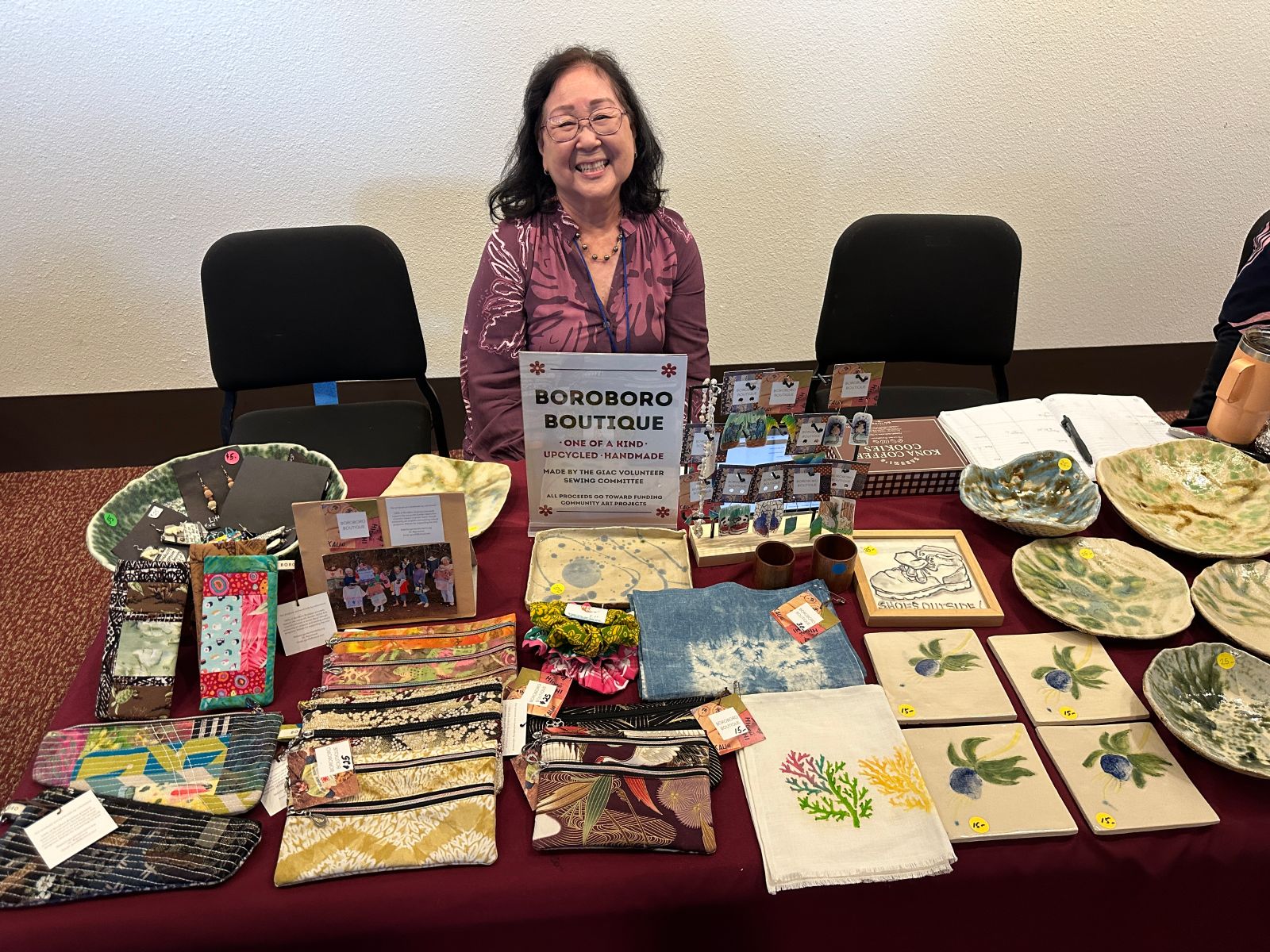
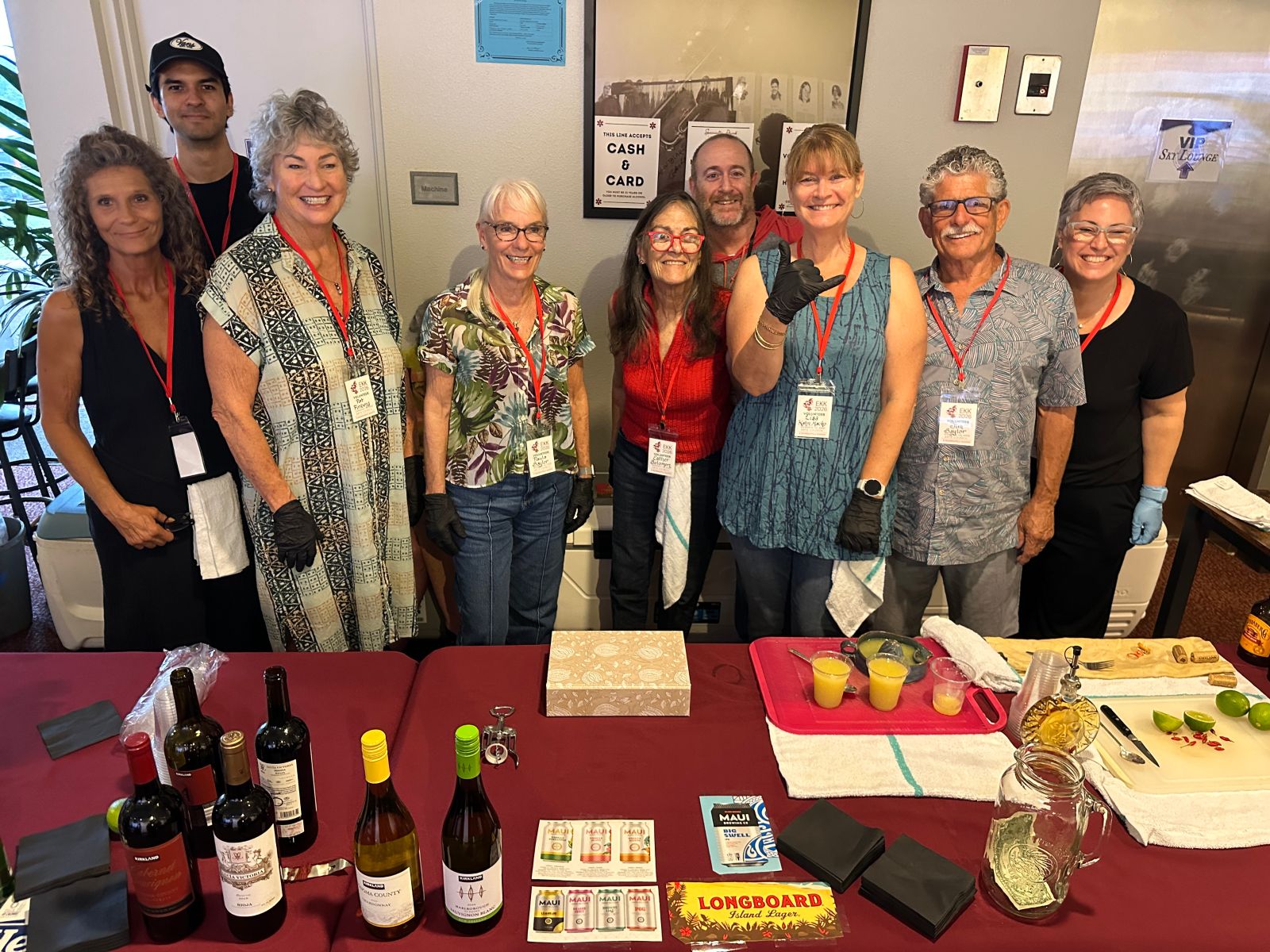
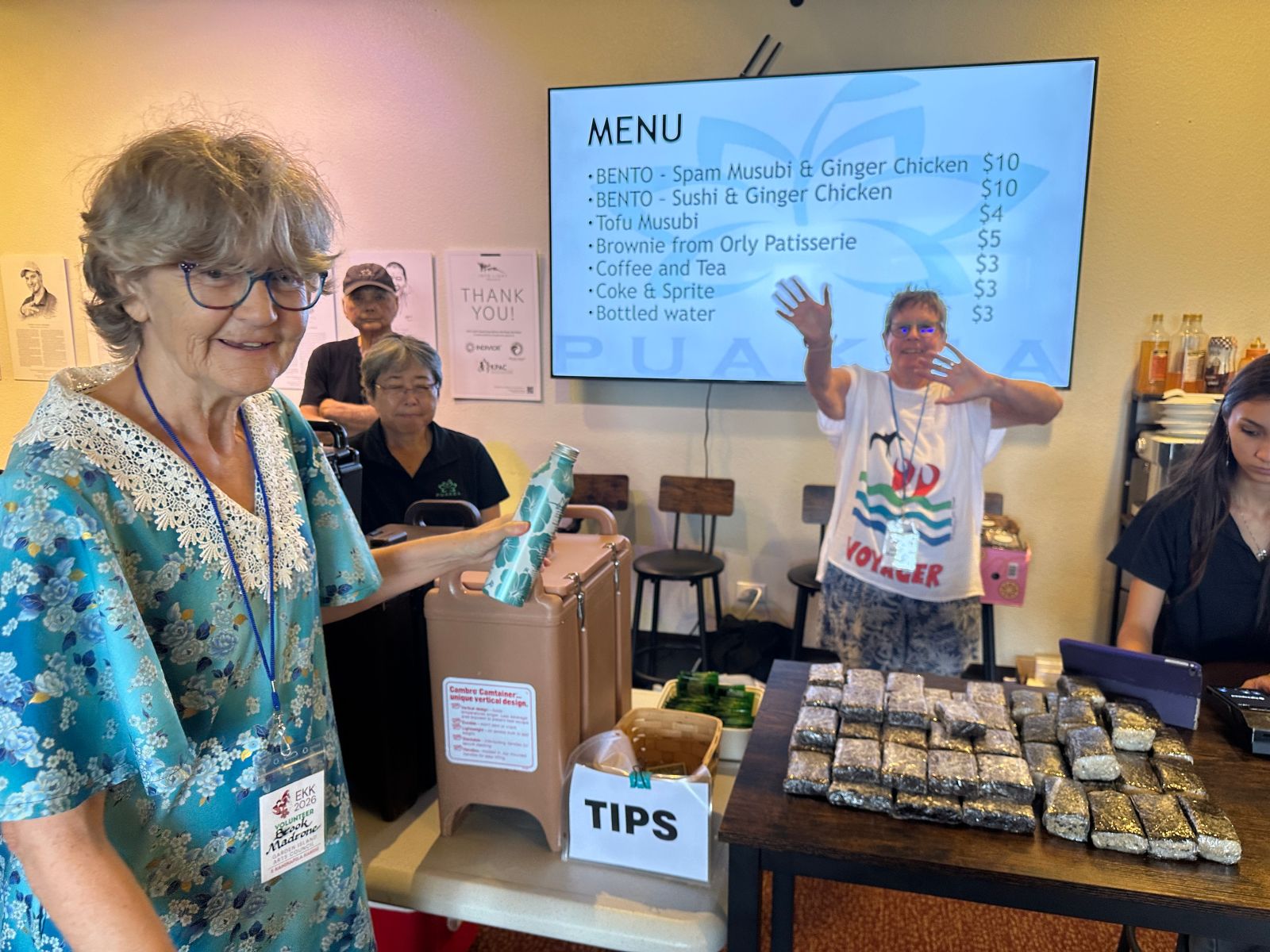
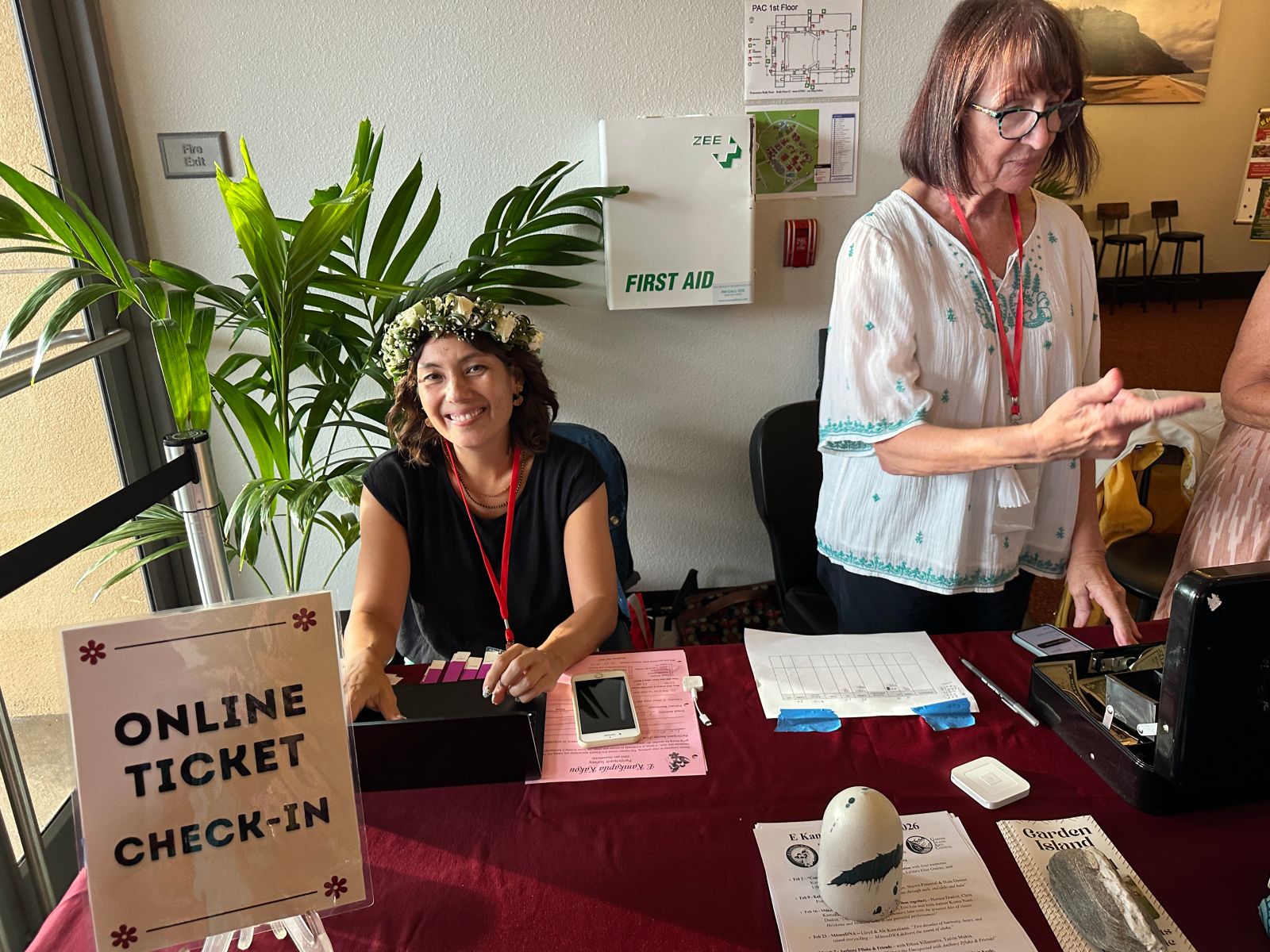
Photos of EKK volunteers who make it all happen week after week
Photos by Mike Teruya, Kathleen Ho, and Anne OʻMalley
Words by Carol Kouchi Yotsuda
If you attended ANY
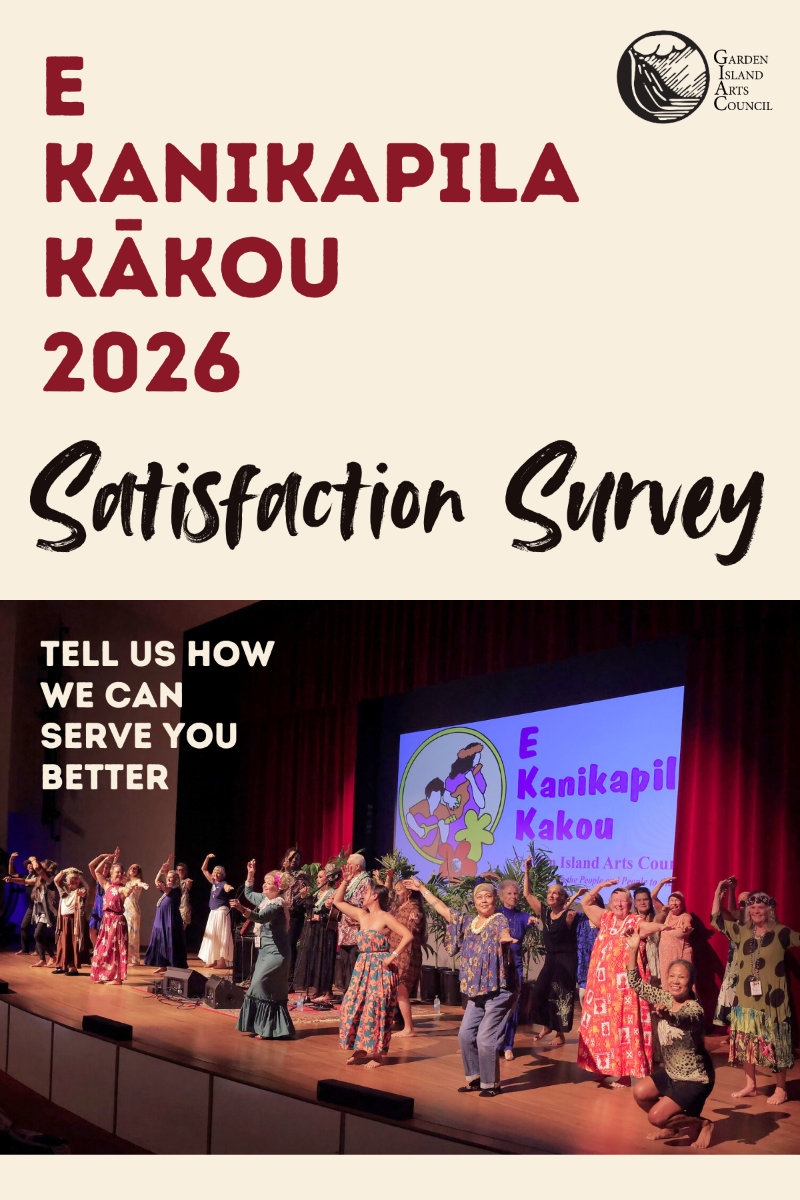
of the eight E Kanikapila Kākou events this season, we would greatly appreciate your feedback by taking our post-event survey

.jpeg)
.png)